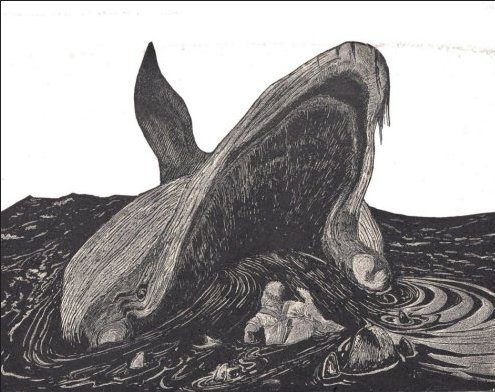
The Pit that they Digged

[a short tale]

MR. HAWKINS MUMRATH, of Her Majesty’s Bengal Civil Service, lay down to die of enteric fever; and, being a thorough-minded man, so nearly accomplished his purpose that all his friends, two doctors, and the Government he served gave him up for lost. Indeed, upon a false rumour the night before he rallied, several journals published very pleasant obituary notices, which, three weeks later, Mr. Mumrath sat up in bed and studied with interest. It is strange to read about yourself in the past tense, and soothing to discover that for all your faults, your world ‘could have better spared a better man.’ When a Bengal Civilian is tepid and harmless, newspapers always conclude their notices with this reflection. It entirely failed to amuse Mr. Mumrath.

The loving-kindness of the Government provides for the use of its servants in the East luxuries undreamed of by other civilisations. A State-paid doctor closed Mumrath’s eyes — till Mumrath insisted upon opening them again; a subventionised undertaker bought Government timber for a Government coffin; and the great Cemetery of St. Golgotha-in-Partibus prepared, according to regulation, a brick-lined grave, headed and edged, with masonry rests for the coffin. The cost of that grave was 175 rupees 14 annas, including the lease of the land in perpetuity. Very minute are the instructions of the Government for the disposal, wharfage, and demurrage of its dead; but the actual arrangements are not published in any appendix to pay and pension rules, for the same reason that led a Prussian officer not to leave his dead and wounded too long in the sight of a battery under fire.

Mr. Mumrath recovered and went about his work, to the disgust of his juniors who had hoped promotion from his decease. The undertaker sold the coffin, at a profit, to a fat Armenian merchant in Calcutta, and the State-paid doctor profited in practice by Mumrath’s resurrection from the dead. The Cemetery of St. Golgotha-in-Partibus sat down by the head of the new-made grave with the beautiful brick luung, and waited for the corpse then signing despatches in an office three mules away. The yearly accounts were made up; and there remained over, unpaid for, one grave, cost 175 rupees 14 annas. The vouchers for all the other graves carried the name of a deceased servant of the Government. Only one space was blank in the column.

Then Ahutosh Lal Deb, Sub-Deputy Assistant in the Accounts Department, being full of zeal for the State, and but newly appointed to his important post, wrote officially to the Cemetery, desiring to know the inwardness of that grave, and ‘having the honour to be,’ etc. The Cemetery wrote officially that there was no inwardness at all, but a complete emptiness; said grave having been ordered for Mr. Hawkins Mumrath, and ‘had the honour to remain.’ Ahutosh Lal Deb had the honour to point out that, the grave being unused, the Government could by no means pay for it. The Cemetery wished to know if the account could be carried over to the next year, ‘pending anticipated taking-up of grave.’

Ahutosh Lal Deb said that he was not going to have the accounts confused. Discrepancy was ‘the soul of bandinage and defalcations.’ The Cemetery would be good enough to adjust on the financial basis of that year.

The Cemetery wished they might be buried if they saw their way to doing it, and there really had been more than two thousand burned bricks put into the lining of the grave. Meantime, they complained, the Government Brickfield Audit was waiting until all material should have been paid for.

Ahutosh Lal Deb wrote: ‘Refer to Mr. Mumrath.’ The Cemetery referred semi-officially. It struck them as being rather a delicate matter, but orders are orders. Hawkins Mumrath wrote back, saying that he had the honour to be quite well, and not in the least in need of a grave, brick-lined or otherwise. He recommended the head of the Cemetery to get into that grave and stay there. The Cemetery forwarded the letter to Ahutosh Lal Deb, for reference and order.

Ahutosh Lal Deb forwarded it to the Provincial Government, who filed it behind a mass of other files and forgot all about it.

A fat she-cobra crawled into the neglected grave, and laid her eggs among the bricks. The Rains fell, and a little sprinkling of grass jewelled the brick floor.

The Cemetery wrote to Ahutosh Lal Deb, advising him that Mr. Mumrath had not paid for the grave, and requesting that the sum might be stopped from his monthly pay. Ahutosh Lal Deb sent the letter to Hawkins Mumrath as a reminder.

Hawkins Mumrath swore; but when he had sworn, he began to feel frightened. The enteric fever had destroyed his nerve. He wrote to the Accounts Department, protesting against the injustice of paying for a grave beforehand. Deductions for pension or widow’s annuity were quite right, but this sort of deduction was an imposition, besides being sarcastic.

Ahutosh Lal Deb wrote that Mr. Mumrath’s style was not one usually employed in official correspondence, and requested him to modulate it and pay for the grave. Hawkins Mumrath tossed the letter into the fire, and wrote to the Provincial Government.

The Provincial Government had the honour to point out that the matter rested entirely between Mr. Hawkins Mumrath and the Accounts Department. They saw no reason to interfere till the money was actually deducted from the pay. In that eventuality, if Mr. Hawkins Mumrath appealed through the proper channels, he might, if the matter were properly reported upon, get a refund, less the cost of his last letter, which was under-stamped. The Cemetery wrote to Ahutosh Lal Deb, enclosing triplicate of grave-bill and demanding some sort of settlement.

Ahutosh Lal Deb deducted 175 rupees 14 annas from Mumrath’s monthly pay. Mumrath appealed through the proper channels. The Provincial Government wrote that the expenses of all Government graves solely concerned the Supreme Government, to whom his letter had been forwarded.

Mumrath wrote to the Supreme Governinent. The Supreme Government had the honour to explain that the management of St. Golgotha-in-Partibus was under direct control of the Provincial Government, to whom they had had the honour of forwarding his communication. Mumrath telegraphed to the Cemetery to this effect.

The Cemetery telegraphed: ‘Fiscal and finance, Supreme; management of internal affairs, Provincial Government. Refer Revenue and Agricultural Department for grave details.’ Mumrath referred to the Revenue and Agricultural Department. That Department had the honour to make clear that it was only concerned in the plantation of trees round the Cemetery. The Forest Department controlled the reboisement of the edges of the paths.

Mumrath forwarded all the letters to Ahutosh Lal Deb, with a request for an immediate refund under ‘Rule 431 A, Supplementary Addenda, Bengal.’ He invented rule and reference pro re riata, having some knowledge of the workings of the Babu mind.

The crest of the Revenue and Agricultural Department frightened Ahutosh Lal Deb more than the reference. He bewilderedly granted the refund, and recouped the Government from the Cemetery Establishment allowance.

The Cemetery Establishment Executive Head wanted to know what Ahutosh Lal Deb meant.

The Accountant-General wanted to know what Ahutosh Lal Deb meant.

The Provincial Governinent wanted to know what Ahutosh Lal Deb meant.

The Revenue and Agricultural, the Forest Department, and the Government Harness Depot, which supplies the leather slings for the biers, all wanted to know what the deuce Ahutosh Lal Deb meant.

Ahutosh Lal Deb referred them severally to Mr. Hawkins Mumrath, who had driven out to chuckle over his victory all alone at the head of the bricklined grave with the masonry foot-rests. The she-cobra was sunning herself by the edge of the grave with her little ones about her, for the eggs had hatched out beautifully. Hawkins Mumrath stepped absently on the old lady’s tail, and she bit him in the ankle.

Hawkins Mumrath drove home very quickly, and died in five hours and three-quarters. Then Ahutosh Lal Deb passed the entry to ‘regular account,’ and there was peace in India.

The Burden of Nineveh

(a short tale)

Small parsons crimp their eyes to gaze,
And misses titter in their stays
Just fresh from Layard’s “Nineveh”.
(The Burden of Nineveh 1856)

It was the Patient East, but not quite as Arnold has painted her. She was thinking, it is true, but there was no dignity in her attire. In the first place, they had given her a beautiful British check-pattern shawl to hide the shoulders that had driven mad Alexander and one or two other gentlemen with armies and aspirations. In the second, they had put a mortar-board atilt on her dark hair, but through some little error it was hind-side before, and the deep part was scratching her nose. There was a bundle of Educational Primers at her feet, and the Tiger, which she used to hold in a golden leash, was sitting on his hind legs snapping at flies. Altogether, the Patient East did not look her best.

“It’s curious,” she thought; and she pinched the beautiful British check-pattern shawl. “It’s very curious!” She squinted at the peak of the mortar-board. “I suppose they mean well.”

And the British M.P. came that way, with his head full of plans for the regeneration of all the Earth, and cuttings from the newspapers in his pockets.

“And how are we to-day?” said the M.P., walking round the Patient East to see that the shawl hung straight, “Very pretty and civilized. We are advancing, madam! We are advancing to a goal which—” then he stopped, for he was not quite sure what the goal was.

“A-b ab; b-a ba; b-a-b bab,” repeated the Patient East wearily, for she knew that the M.P. would be pleased to find that she had been reading her Primers.

“Beautiful,” said the M.P. stepping back to watch the effect of the mortar-board. “In another year or two, my dear madam, we shall be in words of three syllables; and, ere long, I see no reason why we should not arrive at stand-pipes in all the main thoroughfares, coffee-shops, omnibuses, local-option, and—and all the refinements of civilization, including a complete dress of Liberty’s fabrics. You shall walk my dear lady–ah-h’m–you shall walk down Westbourne Grove exactly—er-hmm—like One of Us; and I’ll be delighted to make your acquaintance. My wife takes a great interest—ah-hmm—in the heathen.”

“How kind of her!” said the Patient East without a smile; and her thoughts wandered away to some other wives that she had known.

“Is it not?” said the M.P. blandly. “But then she is a Vicar’s daughter of Enlarged Sympathies. Still, I think, she would not quite approve of your walking about—pardon my saying so—bare-foot. We must have boots—sound, stout walking-boots.”

“What is the matter with my feet?” said the Patient East putting out a shapely gold-ankletted foot that had been set on the neck of some few not altogether undistinguished persons.

“Well”, said the M.P. “I observe that you adhere to that poetical, but still barbarous, custom of dyeing the soles, Lac dye, is it not?”

The Patient East smiled inscrutably. “No—not quite,” she said. “Yes–in a sense; for it is the dye of lakhs and lakhs.”

The M.P. made a note of the phrase, and continued: “I would suggest that you remove it, though it is undeniably picturesque. My wife wouldn’t like it.”

“I’m sorry for that,” said the Patient East gravely. “Is there anything else!”

“Yes,” said the M.P. “We cannot be too careful, my dear madam, just at present. My wife and I have heard, with considerable regret, that you—ah—allow more intoxicating liquids to be drunk among your dependents than is prudent.”

“Ah,” said the Patient East with a queer look in her eye. “I have drunk strange drinks in my time–very strange liquors,” and she quoted, half to herself:-

“We drank the midday sun to sleep, and lit
Lamps that outburned Canopus O, my life
In Egypt! O the dalliance and the wit
The flattery and the strife!”

“Glad to see that you read Tennyson,” said the M.P., “though I cannot approve of all his sentiments. It shows an interest in our glorious literature—inheritance of ages y’know, and all the rest of it. But you will remember about the drink, won’t you? And—ah—there’s another very delicate question.” The M.P. blushed.

“Don’t mind me,” said the Patient East. “These eyes have seen a good deal since they were first opened”.

The M.P. began rummaging in a bag, and pulled out a double-handful of books on grey paper with bold black titles. “Why do you let these things lie about the book-stalls? They—they corrupt the morals of youth, y’know—Not fit to be read. ‘Fraid it’s our fault—doing you serious injury; but you might help us to stop it. Where there’s no demand there’s no supply. Law of trade that.” He mopped his forehead nervously.

The Patient East turned over a few pages of some of the books—they were bad Yank translations of Zola’s novels.

“Aren’t they dreadful?” said the M.P. “My wife says so.” But a smile was dimpling over the face of the Patient East, and it spread till it ended in a burst of mirthless laughter—deep as a man’s and terrible as a Djinn’s. She threw the pied volumes from her, leant back in her throne, and laughed anew. “Shocking depravity!” murmured the M.P.

“And you bring your penny-farthing suggestiveness to me!” said the Patient East. “What have I to do with it? Before your ancestors knew what woad was, my Zolas…”

“Oh! this is positively awful! What shall I tell them at home!” said the M.P. picking up his despised and dispersed library.

“No, it is not shocking,” said the Patient East. “It is you who are so young–ah so young! When you go home, tell them that you have seen me wearing their shawls and mortar-board gracefully. They will believe you. Tell them, too…” She broke off suddenly, for the day was dawning; and there beat up to the stale, hot sky the noise of her servants going to work. They filed past to the tramp of booted feet, the ring of spurs, the rattle of horse-hooves and tum-tums, the thunder of railway trains, the chipping of grave-stones, the bubbling of camels, the cries of the children who were suffering from prickly-heat, and the wails of the mothers who watched their babies dying in lonely out-stations—one by one, swaggered, gallopped, crept or crawled, her captains, councillors, administrators, engineers, planters, and merchants; and each as he passed her throne, said briefly–for he had no time to waste: “Ave Imperatrix! Te morituri salutant!” But in the M.P.’s ears it sounded like “Humph! Another beastly hot day to pull through!”

The Patient East pointed to the crowd. “Tell them that,” she said simply “and don’t bother.”

“But they have nothing to do with the important political considerations… ” began the M.P.

“Little man,” said the Patient East quietly, “if you don’t go back to your vicar’s daughters, and your muffin-struggles, and your important political considerations, I shall kiss you.”

“Oh!” gasped the M.P., “and what would happen then!”

“You would never for the rest of your life be able to see anything as a respectable, middle-class, antimacassar Briton should!” The M.P. took up his carpet-bag and fled over the seas to his wife.

The Patient East dropped her head on her hand and laughed. “After all, what does it matter?” she said. “They will pass away—all my lovers have. I wonder whether I shall be glad or sorry.”

The Wreck of the Visigoth

[a short tale]

Eternal Father, strong to save,
Whose arm hath bound the restless wave,
Who bidst the mighty ocean deep
Its own appointed limits keep.

THE LADY PASSENGERS were trying the wheezy old harmonium in front of the cuddy, because it was Sunday night. In the patch of darkness near the wheel-grating sat the Captain, and the end of his cheroot burned like a head-lamp. There was neither breath nor motion upon the waters through which the screw was thudding. They spread, dull silver, under the haze of the moonlight till they joined the low coast of Malacca away to the eastward. The voices of the singers at the harmonium were held down by the awnings, and came to us with force.

‘Oh, hear us when we cry to Thee,
For those in peril on the sea.’

It was as though the little congregation were afraid of the vastness of the sea. But a laugh followed, and some one said,’ Shall we take it through again a little quicker?’ Then the Captain told the story of just such a night, lowering his voice for fear of disturbing the music and the minds of the passengers.

‘She was the Visigoth — five hundred tons, or it may have been six, — in the coasting trade; one of the best steamers and best found, on the Kutch-Kasauli line. She wasn’t six years old when the thing happened: on just such a night as this, with an oily smooth sea, under brilliant starlight, about a hundred miles from land. To this day no one knows really what the matter was. She was so small that she could not have struck even a log in the water without every soul on board feeling the jar; and even if she had struck something, it wouldn’t have made her go down as she did. I was fourth officer then; we had about seven saloon passengers, including the Captain’s wife and another woman, and woman, and perhaps five hundred deck-passengers going up the coast to a shrine, on just such a night as this, when she was ripping through going up the coast to a shrine, on just such a night as this, when she was ripping through the level sea at a level nine knots an hour. The man on the bridge, whoever it was, saw that she was sinking at the head. Sinking by the head as she went along. That was the only warning we got. She began to sink as she went along. Of course the Captain was told, and he sent me to wake up the saloon passengers and tell them to come on deck.

‘Sounds a curious sort of message that to deliver on a dead still night. The people tumbled up in their dressing-gowns and pyjamas, and wouldn’t believe me. We were just sinking as fast as we could, and I had to tell ’em that. Then the deck-passengers got wind of it, and all Hell woke up along the decks.

‘The rule in these little affairs is to get your saloon passengers off first, then to fill the boats with the balance, and afterwards — God help the extras, that’s all. I was getting the starboard stern boat — the mail-boat — away. It hung as it might be over yonder, and as I came along from the cuddy, the deck-passengers hung round me, shoving their money-belts into my hand, taking off their nose-rings and earrings, and thrusting ’em upon me to buy just one chance for life. If I hadn’t been so desperately busy, I should have thought it horrible. I put biscuits and water into the boat, and got the two ladies in. One of ’em was the Captain’s wife. She had to be put in by main force. You’ve no notion how women can struggle. The other woman was the wife of an officer going to meet her husband; and there were a couple of passengers beside the lascars. The Captain said he was going to stay with the ship. You see the rule in these affairs, I believe, is that the Captain has to bow gracefully from the bridge and go down. I haven’t had a ship under my charge wrecked yet. When that comes, I’ll have to do like the others. After the boats were away, and I saw that there was nothing to be got by waiting, I jumped overboard exactly as I might have vaulted over into a flat green field, and struck out for the mail-boat. Another officer did the same thing, but he went for a boat full of natives, and they whacked him on the chest with oars, so he had some difficulty in climbing in.

‘It was as well that I reached the mail-boat. There was a compass in it, but the idiots had managed to fill the boat half full of water somehow or another, and none of the crew seemed to know what was required of them. Then the Visigoth went down and took every one with her — ships generally do that; the corpses don’t cumber the sea for some time.

‘What did I do? I kept all the boats together, and headed into the track of the coasting steamers. The aggravating thing was the thought that we were close to land as far as a big steamer was concerned, and in the middle of eternity as far as regarded a little boat. The sea looks hugeous big from a boat at night.’

‘Oh, Christ, whose voice the waters heard
And hushed their ravings at Thy word,
Who walkedst on the foaming deep
And calm amidst its rage did keep,—
Oh, hear us when we cry to Thee,
For those in peril on the sea!’

sang the passengers cheerily. ‘That harmonium is disgracefully out of tune,’ said the Captain. ‘The sea air affects their insides. Well, as I was saying, we settled down in the boat. The Captain’s wife was unconscious; she lay in the bottom of the boat and moaned. I was glad she wasn’t threshing about the boat: but what I did think was wrong, was the way the two men passengers behaved. They were useless with funk — out and out fear. They lay in the boat and did nothing. Fetched a groan now and again to show they were alive; but that was all. But the other woman was a jewel. Damn it, it was worth being shipwrecked to have that woman in the boat; she was awfully handsome, and as brave as she was lovely. She helped me bail out the boat, and she worked like a man.

‘So we kicked about the sea from midnight till seven the next evening, and then we saw a steamer. “I’ll—I’ll give you anything I’m wearing to hoist as a signal of distress,” said the woman; but I had no need to ask her, for the steamer picked us up and took us back to Bombay. I forgot to tell you that, when the day broke, I couldn’t recognise the Captain’s wife — widow, I mean. She had changed in the night as if fire had gone over her. I met her a long time afterwards, and even then she hadn’t forgiven me for putting her into the boat and obeying the Captain’s orders. But the husband of the other woman — he’s in the Army — wrote me no end of a letter of thanks. I don’t suppose he considered that the way his wife behaved was enough to make any decent man do all he could. The other fellows, who lay in the bottom of the boat and groaned, I’ve never met. Don’t want to. Shouldn’t be civil to ’em if I did. And that’s how the Visigoth went down, for no assignable reason, with eighty bags of mail, five hundred souls, and not a single packet insured, on just such a night as this.’

‘Oh, Trinity of love and power,
Our brethren shield in that dread hour,
From rock and tempest, fire and foe,
Protect them whereso’er they go.
Thus evermore shall rise to Thee
Glad hymns of praise by land and sea.’

‘Strikes me they’ll go on singing that hymn all night. Imperfect sort of doctrine in the last lines, don’t you think? They might have run in an extra verse specifying sudden collapse — like the Visigoth’s. I’m going on to the bridge, now. Good-night,’ said the Captain.

And I was left alone with the steady thud, thud, of the screw and the gentle creaking of the boats at the davits. That made me shudder.’

The Lamentable Comedy of Willow Wood


“O ye, all ye that walk in Willow Wood,
That walk with hollow faces burning white;
What fathom-depth of soul-struck widowhood,
What long, what longer hours, one life-long night,
Ere ye again, who so in vain have wooed
Your last hope lost, who so in vain invite
Your lips to that their unforgotten food,
Ere ye, ere ye again shall see the light!“

[Dante Gabriel Rossetti (1828-1882) English poet, illustrator, painter and translator.]

page 1 of 7

PERSONS CHIEFLY CONCERNED

HE (a man).
SHE (a woman).

SCENE

Grey Downs, late in the afternoon;
a sea-fog coming over the cliffs.

He. (Roan horse, second-best saddlery, double-mouthed snaffle, nose-band, no spurs, crop.) It feels as though it were going to rain. Suppose we . . .

She. (Bay horse, third-best habit, cloth cap, double bridle, martingale, and worn gauntlets.) I’ve nothing on that can spoil, and there’s nothing to go back for before dinner. I must say the Deeleys are the dearest hosts in the world. Fancy them letting me take out Mickey. I always thought he was specially reserved for Mrs. Deeley. He (aside). Exactly! ‘ Gets the pick of the stable — hauls a man out of the smoking-room, and he gets — hold up, you brute ! —a yorking hog of a hack with the mouth of a turnstile and the manners of a steam-engine, and so must wait her pleasure. (Aloud.) Yes, it’s one of the nicest country houses I know, but look at this beast. The head-groom doesn’t love me. She (aside). Hands of a butcher, if you only knew it. (Aloud.) I’m afraid you have been unlucky. But misfortunes never come singly. It was your fault for loafing so aggressively in the smoking- room.

He. As how?

She. I saw you from the garden, and it seemed that you might just as well take me out as loll on a sofa. So I suggested to Mrs. Deeley — and there really was no one else available. (Aside.) ‘ Mustn’t sulk for half an hour and not expect to be paid out.

He. Thank you. I had supposed there wasn’t. They all went out after lunch. Er — er ! have you noticed the deep interest that the young take in Norman ruins when two can look at them at the same time ? It’s natural, I suppose. (Aside.) I know she saw young Oulthorp go out with Miss Massing. She (aside.) To my address, but clumsy. (Aside.) Yes, I suggested their going. He (aside.) What an atrocious fib. I believe she sleeps regularly after lunch, and I know she never lets Oulthorp look at Miss Massing. (Aloud.) Well, shall we canter on and pick up our archaeologists? She (sweetly.) Can’t you hold him in then? He is dancing a little bit; but perhaps you are irritating his poor dear mouth?

He. Poor dear mouth ! He never had such a thing in his life.

She. But he must have some feelings, and it is hardly worth while harrowing them because your own are upset

He. You are saddling me with all sorts of sins that never came into my head. Of course I’m delighted to be your escort.

She. Of course. What else could you say?

He. This only. If it has seemed good to you to drag out an almost entire stranger for a ride in this particularly sloppy country, I don’t see that it is worth squabbling with him. (Aside.) It’s a strong face and I like it, but I hate having my riding scoffed at.

She. You are a remarkably plain-spoken person.

He. I’m afraid I was led into it. Also I’ll confess I did sulk.

She. I know you did, and I don’t wonder. After all, it must be a bore to entertain a woman who — how was it ? — ” goes to sleep over her soup and looks as though she fed on bolsters “. Eh? He (aside.) Oh, damn !

She. You should never become confidential in the smoking-room with Mr. Dollin. He tells his wife everything, and she, not being too wise, tells me. He (aside.) I wonder if this is her method of being engaging. It is monotonous. (Aloud.) I deny every word of it. Dollin misunderstood. — Did Mrs. Dollin tell you everything that was said in the smoking-room? She (aside.) ‘ Curiously alike men are when you make them uncom- fortable. (Aloud.) Thank you. I know what you mean. Yes, she did ; and I must say that you men might find some better amuse- ment than making fun of poor Mr. Oulthorp. He (aside). I thought so. (Aloud, stiffly.) Pardon me, but was it for this that I was brought out?

She. No. But since you are here I may as well speak. Is it fair?

He. There’s a certain amount of frivolity in a smoking-room, and I suppose Oulthorp gets his share like everyone else.

She. But he doesn’t like it.

He. I’m afraid that makes no difference. (Aside.) This is a revelation I object to being called to account like a schoolboy. (Aloud.) And you know Oulthorp is not very wise.

She. In that he is specially devoted to me?

He. I never said that.

She. But what do you think?

He. Nothing. Why should I ? Am I his keeper — or yours ? Indeed I was no worse than the others.

She. No worse than the others ! There speaks the man. Will you listen to me for a minute?

He. It seems that I was invited to that end. (Aside.) If I sent my heel into the beast I know he’d bolt. ‘ Question is, could I pull him up this side of sunset. (Aloud.) Frankly, you know, I never understood what you saw in young Oulthorp — I mean what your object was in taking him up. As I said just now, he is not over wise, nor, for matter of that, very amusing. She (after a pause.) Have you ever been put on a pedestal and worshipped ?

He. No.

page 2

She. Have you ever known what it was to feel everything you said or did of more importance to one person than anything else in the world — to find yourself treated as absolutely perfect? —

He. Poor beggar! So bad as that, was he? (Aside.) 1 wonder if the beast would bolt. I don’t like this talk.

She. But have you?

He. N-no. Why should I ?

She. How can I tell? And have you ever found all that trust, all that belief, and all that adoration bore you beyond words? He (as his heel goes home). Come round, you brute ! come round !

She. And yet have you felt that you wouldn’t give it up for anybody — that it was, somehow, a refuge from yourself, when you were afraid to think or remember? Can’t you see? He believes in me absolutely. He (looking between his horse’s ears). Um ! She (quickly.) Has he said anything … in the smoking-room?

He. Certainly not. (Aside.) Dollin is a fool, but he has evidently sense enough not to tell everything.

She. Then what do you mean ?

He. Let us look this thing in the face since you will insist on scolding me. Will you do young Oulthorp any good?

She. I shall make a man of him at least.

He. I fancied Miss Massing was more than equal to that little business.

She. She is at perfect liberty — when I have finished.

He. Which will be—?

She. When he goes of his own accord.

He. Have you the courage to wait for the end, then?

She. I don’t think you quite understand. He bores me — horribly.

He. So I am willing to believe.

She. Too good of you, I’m sure, to take the trouble … It is only because he thinks me sweet and perfect. It is not (in a lour twice and slowly) it is not — that — I care ; I don’t. But I shall do him no harm — indeed I shan’t.

He. I have nothing to do with the affair.

She. Yes ; you have. They’ll listen to you for ever in the smoking- room. You have influence over them. Why can’t you keep them amused, instead of helping to make fun of him? You tell them things — I know you do — for I hear of them from Mrs. Dollin.

He. (aside). ‘ Seems to me that Dollin is making a burial-service to be said over his own grave. (aloud.) I never understood it was my mission to amuse a country-house for the sake of young Oulthorp. And, really, do you think that a — a — regard that cannot stand a little chaff now and then— ?

She. Oh, it will go fast enough under any circumstances. Only — only I don’t want to lose it before I must. He (softly, looking at her). Forgive me. I’m so sorry.

She. Do I look like a woman who needs pity? Why should you give it me ? — I don’t want it.

He. Because of what must have gone before.

She. I don’t know what you mean.

He. Don’t you? Would you like me to explain?

She. No. But what do you mean?

He. Nothing. I ask no questions. Only, as a general rule, I imagine a woman does not take a deep interest in the blind adoration that a boy like Oulthorp gives — a boy for whom she does not care either — unless she has lost something much — much — more im- portant . . . But perhaps you are the exception ?

She. (bowing her head). That’s enough. I am the rule . . . And now do you understand me?

He. Less than ever, to tell you the truth.

She. Shall I tell you the truth for a change?

He. At your own risk. Remember I can guess at the outlines, and you may hate me because you have told me. (aside). I wonder if she tells everybody. ‘ Couldn’t be, ‘r else I should have heard something about her in the smoking-room. What a chin it is !

She. Would you care if I hated you?

He. Not a bit. It might worry you a little. Well, tell me.

She. (after a pause). It’s — it’s difficult. There was — and I couldn’t help it — and I had my warnings — lots of women told me about him, and I knew that he wasn’t to be trusted, and I knew that I was the only one who knew that. So I was sure of myself — and I was, you know. But I did care — everything, in every way. That was why, perhaps, it ended as it did. After seven years. My God, after seven years !

He. And what did you do?

She. (simply). Said ” Fank’ oo “, and went away smiling.

page 3

He. You!

She. Yes, me ! Why shouldn’t I ? It was everything in the world to me. And when it finished I hadn’t the heart to complain.

He. You don’t look like a person who would be grateful for being treated in that way. And after?

She. I continued to exist beautifully — with variations.

He. Of what kind?

She. Oh, pictures and the poor. ‘Specially the poor. You can think sometimes if you sit alone painting. If you slumgullion you can’t think. Many others have found out that trick, and the poor owe much to it. Then the boy — young Oulthorp came in, he was some sort of a rest. But I have found that I have a double brain that does its own thinking whatever I do. Did you ever find that?

He. (incautiously). Yes, worse luck.

She. (aside). I knew the fire had gone over his face. (aloud and very slowly) ‘ Pleasant, isn’t it — to find all the sorrow, and all the sacrifice —

He. (hoarsely, looking into the fog). There’s no sacrifice. I’ll swear there isn’t.

She. —all the sacrifice, the care and the tenderness, the forethought, the comprehension, and — and all the rest of it go for nothing just because one person has grown tired.

He. (with a shiver). For goodness’ sake let’s talk of something else.

She. (bitterly). What shall we talk about? Nice things — pretty things ? Books and pictures and plays ? I’m quite ready. You begin. He (after a pause). ‘Don’t think the conversation led up to nice things exactly.

She. How strange ! Well ?

He. Er — does the — does the pain last for ever ?

She. I don’t know. I’ve only had four years of it — every day and all day long. He (feebly). Not really?

She. If — if the other thing was real, this is. It begins when I wake and it ends when I sleep — and it begins again when I wake again.

He. How you must hate the man !

She. Worse than that. I only hated a little in the beginning. Now I am beginning not to care. It’s all over — all except the pain, and so, you see it’s doubly worthless. Believe me, if he were to cross the road now under my feet, I shouldn’t even turn my head to — Good God, what’s that ! A shepherd jumps into the road from a bank. Mickey Shies.

He. Drop your hands; he’s going to bolt ! Gone, by Jove ! Do I follow. She (over her shoulder). Yes. I can just hold him. Come along! Where does this road end?

He. ‘London, if you go far enough. Can you take a pull at your brute?

She. I’ll try. (leans over.) No ! Wait till a hill tires him. I’m not afraid. Who’d have thought it in a quiet steady … I believe I shall be afraid in a minute. Ow ! There goes my hair.

He. Shall I lean over and take a pull at him?

She. (gasping and pulling). No ! ‘Bring him down if you did. He’s coming in — a — little — bit. Ouch ! That’s better. Steady, Mickey darling. There’s nothing to be afraid of. Softly, old man. (pulls horse into a canter.) I didn’t like that.

He. Which ? The man that appeared ?

She. No. Trying to ride away from myself. We might have ended in a quarry.

He. It was the other beast behind him that drove Mickey mad. The best of horses get excited sometimes. By the way, have I to go back and pick up hairpins?

She. Poor thing— no. I’ll bundle it up under my cap somehow with the few that remain to me. (aside.) This man is a man. (aloud.) I wish people wouldn’t pop up so suddenly.

He. He came just in time to show how little you cared.

She. No, that was Mickey’s fault.

He. Even if you caught Mickey short by the head and drove your spur into him.

She. I deny the spur. The other thing may be. (Watching his face.) It seems to please you, somehow.

He. No — I don’t think so. But you do care for that man even now?

She. Yes.

He. In spite of everything?

She. In spite of everything — yes.

He. Good Lord !

She. I don’t think He has anything to do with it. He doesn’t even help to forget. He leaves that to the Bambino.

He. That reminds me. Since we have gone so far, I shouldn’t build too much on young Oulthorp’s absolute devotion.

She. What do you mean? Julia Massing?

page 4

He. Yes, I think so. She (absently). Little Liar! He’s like you, though.

He. Why? I never adored you.

She. No, but you have lied to someone else. I am certain of it.

He. And if I did, what have you gained by keeping faith?

She. Seven years of life at least. I am only paying for them now.

He. Is the price too high — are you sorry ?

She. Yes, I am sorry — bitterly sorry — that I ever knew him. There’s no dignity of tragedy to console me. I am sorry, and I laugh at myself for being sorry.

He. But if you had the chance over again what would you do ?

She. Why do you ask — why do you want to find out? So that you may measure another woman’s pain by mine ; because you have treated some woman as —. Is that it?

He. I—I don’t know.

She. But I do. (Edging in towards him.) Look at me. Even I — even I am Beatrice ! That line at the corner of the eyes comes from crying — doctors will tell you so — crying till there are no more tears to cry. That little horseshoe in the forehead — now con- sidered fascinating — comes from lying staring wide awake without shutting your eyes, night after night, thinking, thinking, thinking everything over again from the beginning. You can get that mark for life after three nights’ pain. I have it. Those are the outward and visible signs — some of them. The mouth, too — (leaning to the off side). He (dully). Yes, I see.

She. You don’t. All you are thinking of is —

He. God forbid ! She (leaning further). My dear sir, it would be quite enough if I (softening) gave permission.

He. No, thank you. Not this dance. She (resettling herself in her saddle). Then I believe you do care for her. He (aside). A chance missed. (Aloud.) Pooh ! that’s no proof. But you needn’t continue your explanation.

She. I could say such a lot if I chose. He (leading towards the cliff’s edge). Go on, then. You were talking about mental symptoms.

She. I was, but I won’t go on. (Aside, to herself.) It seems to me that the fog or something is seriously affecting your brain, dear. Never mind. Dinner at eight, two gongs, and a fat man to take me in. Let us be thankful, O Civilisation, for all thy mercies.

He. I want you to, though.

She. Then I will. (Aside.) You will have it, and I would have let you off because you understood — a little. (Aloud.) There are one thousand different ways of going to perdition. She will probably choose the nine hundred and ninety-nine that I have not taken. And it will be your fault. She may even bless you later for setting her on one of those roads. Does that hurt sufficiently?

He. I have known pleasanter things. Well?

She. There’s no more to say. You can hurt yourself better than I can hurt you. How long was your affair for ?

He. Five years.

She. Who ended it ?

He. It ended itself.

She. Sweet child of nature ! That wrought my only woe. In other words, it was your vanity — as it was his. He (aside.) My turn now. (Aloud.) Perhaps your friend got tired.

She. It is very possible. I was everything and more than everything. Now I am nothing, and less than nothing. But I never cheated in word or deed.

He. Did he, then?

She. I was thinking of her. He (wincing). I can do my own thinking there, thank you.

She. I fancied from your invitation you wanted an assistant.

He. Good heavens ! What is the use of two rats in a burning bucket biting at each other? Let’s swear eternal peace.

She. Because you are getting hurt — eh? I am hurt day after day, hour after hour, minute after minute — but you only while you are talking to me — because you’re a man, and therefore a coward.

He. And therefore a coward. It’s a consoling knowledge. (He edges horse towards cliff’s edge.)

She. Doesn’t it make you want to swear at me? He (reining up and looking at the beach below). No. Anything but that just now. Can you see down there, through the fog?

She. Yes ! It’s a remarkably pretty view. (Sees Oulthorp and Miss Massing, side by side.) Aah !

He. So much for Norman ruins.

She. Thank you. So one of them thinks. But what a finished liar Oul- thorp must be. If he had only spoken the truth. (To herself.) Why, only today . . .

He. I daresay he had a natural hesitation about approaching you on the subject.

She. He didn’t understand. (Critically and peering down.) He is kissing Julia Massing.

page 5

He. Why not?

She. Why not, indeed? At this very moment, by the light of the knowledge you taught her, she may be— (his horse plunges away from the cliff). He (administering correction with the crop). That engagement will be given out tonight, in their faces, and announced at breakfast to- morrow. You’ll have to congratulate him.

She. If you had only kept the smoking-room amused, I might have had three days more of Oulthorp’s ” eternal devotion “. That’s all.

He. Remember, I only came into your councils this afternoon-—late.

She. And we have done each other an immense amount of good since?

He. We have sympathised at least. She (throat-note in voice). There’s nothing like sympathy—-holy sympathy, is there?

He. Nothing. Especially when one is in real trouble.

She. ‘So sweet, when a man lays his hand on yours — quite by acci- dent— and says that he is prepared to sympathise with you to any extent —

He. Ho ! ho ! They do that, too.

She. You know. And the next minute you find that the hand has be- come an arm, and you are standing with your back to the mantel- piece spitting ” Sir-r ! ” like an angry pussy-cat, and asking what in the world he means. For comprehension and disinterestedness, give me the sympathy of a man. He (tenderly). All the same I am sorry for you — dear.

She. I didn’t catch the last word. I’ll believe the others.

He. That’s enough, then. I am sorry.

She. Because you see in me the best possible result of what you may have done to her ; and you don’t like it? Sorrow? What use is sorrow to me? If all the hosts of Heaven came down and said they were sorry for me, I could only give them tea, and tell them that they bored me. They should have set things right in the beginning.

He. Blame the poor little cherubs, of course ! I thought you were more honest than that !

She. I am only talking nonsense — you know what I mean. We have no right to complain. But we do.

He. It takes a great deal to make people understand that if they break the Tables of Stone the pieces cut their feet.

She. And then they find out that they mustn’t show the pain. It isn’t pretty, and it doesn’t amuse drawing-rooms. If it did, I should be happy to scream for hours like a steam-engine.

He. Which reminds me — by way of stoking— I wonder what there’ll be for dinner tonight.

She. The first and the last dish is Mr. Warbstow, who explains to us that we attach too much importance to the Deity. I yawn.

He. Mrs. Deeley has a gift for collecting queer people at her troughs.

She. And none queerer than our two sweet selves. Fancy her face if she could listen now !

He. She would be truly grieved. Don’t you think we might try to change the conversation ?

She. I forgot. I have my punishment here now and yours comes later. Very well. What shall we talk about? The fog? He (after a pause). I don’t see why you should be so certain of your luck. I am punished too.

She. Only a little— for just as long as you are talking to me. Wait the hereafter. He (wiping his forehead). But surely I am punished now. If I had killed anyone it couldn’t be worse.

She. Killing’s nothing. You may have done exactly the opposite. In which case, your torment will be heavier. Think of it for a minute, I was killed : and I am not grateful to the man who killed me. She may thank you yet for waking her to life. Does that hurt enough?

He. Enough to pay for all.

She. Not unless you keep on thinking. One spasm of agony does not pay. You must think.

He. I — I dare not.

She. Exactly. I dare because I must. You don’t because you have other things to do. Therefore you will be dealt with later. As my mur- derer will be.

He. How do you know?

She. I don’t — and to tell the truth I don’t care — as far as you’re concerned.

He. I know you don’t, but you needn’t have said so.

She. What mercy do you deserve? If you suffer as you say you do so much the better for you. Oh, dear God ! if I could believe that he felt for one little minute only a tithe of what I feel every hour I’d die contented.

He. Have you never tried to go through the door then?

She. Once. A year ago.

He. How?

She. The silver cigarette-case and the graduated tubes, of course. Is there any other way ? And — and when I had sat down — I was in that old black frock you spilt some coffee over the other night -— I — I thought, when it would be all over, of a hand keeping me down in the chair, and saying — ” Think. Go on thinking, dear. There’s all eternity to think in “. So it seemed to me I should gain nothing.

page 6

He. An eternity of sitting still in a comfortable chair and thinking.

She. That was only my notion. We’re told that God’s mercies are infinite. There may be more horrible tortures.

He. Which be they?

She. For you? Oh, watching her — perhaps. I don’t think anything could make me do more than giggle. My punishment is now — now — now ! Here, at the Deeleys’ and anywhere else, and the only pauses allowed are like the vinegar to give me fresh strength to feel. It’s cruel. He (laughing). Wages o’ sin, mum, wages o’ sin.

She. It’s not fair. If the wages were death I’d have claimed them long ago — long ago.

He. On the strict understanding that you went to sleep immediately afterwards. Isn’t that a little cowardly?

She. O help me ! Am I to endure for ever ?

He. As long as the Law endures. You have given me the same comfort, and — it’s very cold. (A long pause, during which he watches her face.) She (dropping right hand on the pommel-head). Let’s protest. Let’s rebel !

He. Against what, and which, and how?

She. Everything that makes us what we are. Lost faith — lost hope — lost belief — and — and all the rest.

He. Then isn’t there anything to pick out of the wreck?

She. If you give everything nothing remains.

He. Are you so sure?

She. As sure as you are.

He. Every moment tells me that — I am not sure. She (aside). How like a man. (Aloud) That is the last five moments — only a little feeling born of pique and longing for the impossible.

He. It is more. I am certain of it. All things have their first five minutes though they go on for centuries— She (aside). It grows amusing. He is almost interesting.

He. —— We both stand at the same starting-point ; we have gone through the same fire. Doesn’t it draw us together? She (with a little laugh). How ; in what ? In that we have both come out on the other side with the life burnt out. The sympathy of cinders? Too late, it is all too late.

He. I don’t believe it’s possible to suffer for — (Mickey shies violently and disappears into the fog). What’s that — where have you gone to? She (from the fog). A gipsy fire, I think. Burned out. What a stupid horse; he must have seen that a dozen times.

He. The fog made it look large. Come back (voice rising), Oh, come back to me, little woman !

She. I never came. How can I come back?

He. Then come now.

She. Mickey’s ‘fraid.

He. Cut his soul out !

She. And make him happier than myself. No (To horse.) Come along, Mickey. There’s nothing to be scared at. Only ashes, little white ashes. (Cantering through the fog ; leaning off side and holding out her hand.) I am so tired, so tired — and I am here. He (taking her hand and dropping it). ‘No use. It doesn’t bite.

She. I thought it wouldn’t, and now I know. All things are finished, there is no more fire, no more life, only the pretending, and the pain, that is all. This is part of the punishment. God help us both.

He. He can’t. But I hoped somehow that we might pick up some pieces sometime.

She. We could, if you could tell me one oath that I have not heard from his lips, or I could give you one promise that you had not heard from hers. And yet you were prepared to risk it ?

He. I am still — because you understand.

She. I think I understand too well. But you shall enlighten me. Suppose, for a minute, that you really love me.

He. I have supposed that for some minutes already.

She. Then say it in a loud and cheerful voice. Can you?

He. Yes. I love you. She (quietly). Do you know anything of the state of Mickey’s hocks? (Aside.) I know if you put your hand behind the cantle he rears on end.

He. Damn Mickey’s hocks !

She. No, something quite different. (Puts hand behind cantle — Mickey rears.) Now recant quickly. Swear by the holiest thing you know — swear by her life — up, Mickey ! — that you’d let me and this dear beast — doesn’t he stand up beautifully and snort ? — drown or die, if you could get her back for half a minute. Quick ! recant, or I’ll pull Mickey over backwards. He (wearily). Let him down. You needn’t have thrown in the circus. It’s true.

She. By Her life, is it true?

He. By Her life. She (as Mickey drops on his forelegs). Then you are —

He. I am what I am. For pity’s sake, let me be. Let’s go back. (Oul- thorp and Miss Massing trot past in the fog.)

page 7

She. Very good. Keep behind these two and contemplate the rewards of virtue. We’ll go slowly in order that we may appreciate the things we have lost.

He. Indeed we won’t. We’re going to ride as fast as we can.

She. You have no spur ?

He. He’ll answer to the whip, and you can rowel enough for both. Take him up and we’ll go. (They go.)

She. We mustn’t turn into the Deeleys’ grounds at this rate. Pull up, and I promise not to say another word till we get in.

He. On your honour?

She. You swear by strange gods — yes, if it will please you. (She keeps the promise till they are coming up the carriage-drive.)

She. Oh, the girls have been singing all the afternoon. I wish I’d stayed in to assist. Listen ! (They rein up by the shrubbery.) (Contralto Voice from the music-room; piano and violin accom- paniment.)

“I am lost to faith, I am lost to hope,
I am lost to all that should make me fain—
I have lost my way in the light of day,
God send that I find it soon again !”

He (taking her hand). Then there is one chance after all?

She. No ; (aside.) you threw it away by the fire. (aloud.) Listen for the next verse. I know the song. It’s a new setting.

Voice:
“The sun went down an hour ago,
I wonder if I face toward home.
How shall I find it now night is come—
Now night is come!”

She (Dropping from her horse). Think! And — go on thinking.

One Lady at Wairakei

THE EXTRAORDINARY THING about this story is its absolute truth.

All tourists who scamper through New Zealand have in their tours visited the geysers at Wairakei, but none of them have seen there what I have seen. It came about with perfect naturalness. I had wandered from one pool to another, from geyser to mud spout, mud spout to goblin bath, and goblin bath to fairy terrace, till I came to a still pool, where a wild duck sat bobbing on the warm green water, undisturbed by all the noises of the wonderful gorge. A steam jet hidden in the brushwood sighed and was silent, a tiny geyser gobbled, and a big one answered it with snorts. I thrust my stick into the soft ground, and something below hissed, thrusting out a tongue of white steam. A wind moved through the scrub, and all the noises were hushed for an instant. So far there had been nothing uncommon—except geysers and blow-holes—to catch the eye. Therefore I was the more astonished when from the depths of the pool, and so quietly that even the wild duck was not scared, there rose up the head and shoulders of a woman. At first I imagined that I had better get away. But, since I had seen the face, I did not move. The woman flung back her long hair, and said, laughing:

“Well?”

“I—I beg your pardon,” I stammered. “But I didn’t know—I didn’t—I mean—”

“Do you mean to say that you don’t know me?” she said. “To be sure in your profession I’m more talked about than seen.”

“To whom have I the pleasure of speaking?” I said desperately—for it is not seemly to stand on a bank and talk to a woman who is swimming in the water. Besides, I felt sure that she was laughing at me.

“They call me all sorts of things,” was the reply; “but my real name is Truth. Haven’t you heard that I live in a well? This is it. It communicates directly with the other side of the world, but I generally come here for peace and quiet on a Sunday. I have some friends here.” She nodded casually up the gorge, and I heard the geysers bellow.

Natural politeness and a strong desire to see whether she was not a mermaid led me to put the next question. It came rather clumsily.

“Aren’t you going to get out?” I asked.

“I can’t. You’d die if did, because I’m the Truth, the Whole Truth, and Nothing but the Truth. No man can see me and live.” She swam a few strokes towards the bank, and rested while the steam drifted in clouds across the pool. I sat down and stared again.

“Some people,” said Truth, “would say they were pleased to meet me.”

“I’m not,” I replied. “You see, or rather I see, in the first place, that you are too unconventional, and in the second place I never believed in you—much.” This was not in the least what I meant to say, but the words came of themselves. Truth laughed.

“Shall I go away?” she said.

“This pool is private property. I’ve paid to see it. You haven’t. What do you think yourself?”

“From your point of view you‘re quite right, but—you wouldn’t care to see a fresh geyser break out just under your feet, would you? or a mud volcano? or a rift in the earth? My friends would be happy to oblige me. Shall I ask them?”

“Truth,” I said, jumping up, for the ground was shaking like a boiler-plate, “you know as well as I do that you‘re making me say unpleasant things, and now you propose to boil me alive for saying them. You’re illogical, because you’re a woman, and I’m going back to the hotel.”

“Wait a minute,” said Truth, laughing. “I want to ask you a question, and then l won’t be rude any more. How do you like New Zea——?”

“Don’t!” I shouted, “Please don’t! Let me put the answer on paper, at least.”

“Tell me now,” said Truth, “or I’ll splash hot water at you, Tell me the truth.”

“Promise me you’ll tell me anything I want to know afterwards?” I said, for I felt the answer coming, and it was not a polite answer.

“I promise,” she said, and heard my remarks out to the end.

“H’m!” she said, gravely. “One big encumbered estate, is it? Folly to play at party government when the whole population is less than half the German army? All in the hands of the banks, is it? Forty thousand horse-power to drive a hundred-ton yacht, and the country not scratched? Upon my word, you’ll get yourself dearly beloved if those are your sentiments, and you say them aloud.”

“Well, it is absurd, isn’t it, if you can run the place with three men and a boy, to start Upper Houses and Lower Houses, and pay a few hundred men to help spend borrowed money?” I persisted. I knew that I had gone too far to explain.

“I admit nothing. I’m the Truth,” she said, “and I merely wished to hear what you considered the truth. It’s your turn to ask questions now. I’ll give you five minutes to think of them.”

“Tell me the truth, the whole truth, and nothing but the truth, about New Zealand,” I said promptly.

“Banks—railways—exports—harbour boards, and so forth—eh?” She smiled wickedly. “You will find all that in books.”

“No. I want to know how the people live, and what they think, and how they die; and what makes them love and fight and trade in the particular manner in which they fight and love and trade. That isn’t in the books.”

“No—not yet,” said Truth thoughtfully, drawing her pink fingers to and fro through the water. “It will come some day.”

“That’s just what I want to know. When is it coming?”

“What?”

“The story of the lives of the people here. I want to read it.”

“Perhaps they haven’t any lives. You said they were all in the hands of the banks. How can you expect an encumbered estate, mortgaged to the hilt, to have a life of its own?”

“Truth, you’re prevaricating. You know I didn’t mean that. Banks have nothing to do with the inside lives of peoples. I have not the key to the stories myself, but they are here in the country somewhere—thousands of them. When are they going to be written, Truth, and how are they going to be written, and who are going to write them?”

“My young men and my young women. All in good time. You can’t fell timber with one hand and write a tale with the other. But they’ll come, and when they come—”

“Yes.”

“The world will listen to them. Do you remember coming through some dense bush fifty miles down the road? Well, half a mile from the road, down in a gully among the tree ferns, there lies the body of a man under the butt of a great pine tree. He loved a woman at a sheep station—one of the women who serve up the ‘colonial goose’ to the tourist when he stops at the wooden shanties with the chemists’ presentation almanacks on the walls—a red-faced raddled woman who talks about ‘ke-ows,’ and ‘bye-bies.’ He was one of three lovers!”

“Whew!” I said. “That sounds like an old story.”

“Yes, it is an old story—otherwise it wouldn’t be new. And that woman in her sloppy, slatternly house among the fern-hills where the sheep live, played with those three lovers as a Duchess might have done; and the drovers and the sheep-men came down the road and said most awful things. She took her sentiment and her heroics out of the bound volumes of the Family Herald and Bow Bells—you’ve seen the tattered copies in the wooden houses on the tables where the painted kerosene lamp stands, haven’t you? But her iniquity was all her own. Two of her lovers were just sheep-men, but the third was a remittance-man, if you know what that is, and he had been a gentleman in England who thought a good deal of himself.”

“And she killed him?”

“No, he killed himself. At least, after some things had happened, he went out into the bush and carefully backscarfed a big tree so that it would fall in one particular direction, and stood there when it fell. Now he will become a rata-vine. Remember, he had loved her for three years and put up with everything at her chapped hands.”

“So she did kill him.”

“That comes of knowing too much. He killed himself after a good think, wholly and solely on account of a girl in England whom he had no chance whatever of winning. I think he realised that competing with sheep-men for stolen kisses behind corrugated iron sheds was not nice; and that showed him several other things. So he died, and the husband, of course, had to get a new hand for the shearing. But she believes that she killed him and—she is rather proud of it.”

“Truth, who is going to tell that story?”

“I don’t quite know. Perhaps one of her children, or grandchildren, as soon as the spirit of the fern hills—they are very lonely, you know—and the snow mountains has entered into his blood. Yes, it shall be one of her children (that is to say, one of his children) and he shall lie under wool-drays in summer, and sleep with his back on a salt-bag, and his heels on a bag of harness, and be frozen and sun-tanned, and ride long rides at night, fording rivers, to make love to big, round-faced girls, till he finds that story. Then he will tell it and a hundred thousand things with it, and the world will say, ‘This is the truth, because it is written so.’”

“And after?”

“Afterwards he may try to tell other stories as good as the first. If he tries he’ll fail, but there are thousands more. Hark! Do you hear nothing?”

Under my very feet there was the dull thud as of a steam-hammer in a mine—a thud that rippled the still waters of the pool and struck the geysers dumb.

“What’s that?” I asked, wondering and afraid.

“It’s down in the guide-book as a Natural Phenomenon. But you have heard of the Roaring Loom of Time, haven’t you? That‘s the shuttle clicking through the web, and you know who the Weavers are?”
I bowed my head and was silent, having no wish to meet the Fates yet.

“They are busy today,” Truth continued. “It is no easy work to weave the souls of men into their surroundings. So far, they have done little. The men don’t belong to the mountains and the plains and the swamps and the snow passes and the fiords and the thick fat grazing land—and the women, of course, poor dears, they belong to the men. But in time the men will be of the land, and write of the land and the life of the land as they have seen it and as they know it. Then the people will know themselves, and wonder at their own lives. There is a girl-baby nearly a thousand miles away from here. Her father found a pass through the Southern Alps, and good grazing ground the other side. So he stole people’s sheep, drove them through that pass, and was well to do till people found him out and he disappeared. That girl has lived among the mountains and the snow rivers all her days. She knows how the water comes down cold as ice, and chokes men and horses, and tosses them out on the shingle a dozen miles down stream. Some day, I think, she will sing up there among the mountains, and half the world will listen. After her will come others—women—and they will tell how women love men in this country, and all the women all over the world will listen to that.”

“Won’t that be rather an old story?” I demanded.

“Of course it will (Eve loved Adam very much, I remember), but you forget what the hills and the clouds and the winds and the rain and the sun can do. Remember how nearly some parts of this land run into the tropics, and wait till you hear them sing.”

I remembered at once and sat corrected.

“But won’t they imitate Shelley and Tennyson, and Mrs Browning?”

“At first, naturally. When they belong to their own country you will hear what you will hear.”

“And what shall I hear?”

Truth was silent for a while, and then raising one shapely arm from the water, said softly:—“Listen now! Listen and see!” The thud of the loom beneath me ceased, and the dead air became full of voices, thickened into shadows that took form and became men and women, before my amazed eyes.

A man with a shaggy red beard and deep sunk eyes strode forward scowling; and with savage gestures and a hundred hurrying colonial oaths, told a tale of riotous living, risk of life, sorrow, despair, and death. “I have suffered this, and I have suffered that, and my tale is true,” he cried. A woman cumbered with many children, but in whose face there were few wrinkles followed, and—“Our lives were very quiet in Christchurch,” she said, “as quiet as the river, and—and I thought, perhaps, that if I wrote just our little lives—for the children, you understand . . . But, oh!”——she clutched my arm nervously—— “it—it has just been the saving of our house.”

Truth laughed tenderly as the woman passed on, gathering her children round her.

“She will be taught through Poverty,” said Truth; “but thousands of mothers will laugh and cry over her tale.”

The men came next, assured and over-confident some, crippled and doubting others, but each with his tale to tell of the land he knew, the loves he had loved, and the life that lay about him. There were tales of the building of new cities; desperate intrigue for diversions of the local railroad; of railway frauds; local magnate pitted against local magnate, both fighting furiously, first for their own pockets, and next for the interests of their towns; tales of gumdigging under the dusty manuka scrub, and dreams of lost loves and lost hopes in the dead-houses of the country pubs; stories of the breaking of new lands, where the wisdom of men said that there was not feed for a rat; of Toil that began before dawn and lasted far into the starlight, when men, women, and children worked together for the sake of their home, amid the scarred and blackened stumps; stories of unclean politics, swayed by longshore loafers drowzing at wharf ends, and, in an almost virgin land, clamouring for the aid of a spineless Government; of money paid to three or four hundred of these who dared not work, and for each payment of a thousand pounds twenty times that much capital scared from a land that, on its own confession, was as hopeless as an eight-hundred-year-old island. Lastly, a change sudden and surprising, in the midst of this keen-voiced strife. I heard tales of gentle lives, as sheltered in the midst of the turmoil as the ferns in the gorge—lives of ease, elegance, and utter peace, begun under the trailing willows, where the little children go to school, two and three together, astride of the old bare-backed horse, and ended in some well-kept cemetery, looking seaward to America. They were old tales, but upon each lay the stamp, inimitable and indescribable, of a new land and of fresh minds turning the thought, old as Adam, to lights as new as the latest road across the mountains. And, Heavens! how they gambled and swore and drank in the pauses between the crises, thinking no shame of themselves, having no fear, and reverence only for that which was indubitably and provedly stronger than themselves. But there were liars, too, among the crowd, smooth-faced men who shaped their work as they conceived that other folk would best approve, and a few of those unhappy souls whose fate it is to pile up wealth of fact and fiction that stronger people may raid into it at will. I caught one wail of a weak-lipped shadow:—“But I—but I wrote all this before, and another has merely re-written my work, and he gets the credit. It was I—it was I!”

“He will suffer,” said Truth. “With his temperament he will probably die; but it is necessary. Hark to the women now. They tell the old story well.”

I listened as the shades went by—of girls too early dead—sterile blossoms whose only fruit was a song; of hard-featured Scotchwomen preaching wittily and wisely with illustrations drawn from the rainy wind-swept South, the fear of the Lord that goes to the making of home; of mothers driven by bitter grief and loss to soothe the grief of others, marvelling in their simplicity that they could so soothe; and of maidens who had never known love, and therefore told his power and his beauty till heartstrings quivered twelve thousand miles away. Since they were women they sang chiefly of the things about their homesteads, the orange-ribbed black velvet of the burnt fern-hills, the windy plains overlooked by the mountains whose scaurs are the faces of dead kings, the jade-green rivers with the oily swirls in them that run through the bush and take away the lives of little children playing at the back of the house, the long breathless days when the iron roof works uneasily over the new wood framing, expanding till noon and contracting till night, when you hear the buzzing of the flies about the face of the sick one under the roof, and outside the rush of the wild horses, their twilled manes flying free over the shoulder point, across the crackling, dried swamp-bed as it reels in the sun-haze. There was always a man in their songs—a man who went away and never came back, a face seen on horseback for a day and lost for evermore, or some treachery of a man with only the black stumps for witness to the sin, or a drowned man brought up from the river-bed at night through the grass that he had planted only that spring—only that spring. The shades passed, and the click and thud of the unseen loom recommenced.

“Well,” said Truth, “you have seen?”

“It is very well,” I answered. “But when does it begin?”

“Oh, I forgot that you people die so soon. In five years, in fifty, in five hundred. What does it matter to me?”

“Will it be in my time?” I asked eagerly. I wanted to hear some of the tales again.

“I cannot say. Perhaps—some of it—if you live long enough. Be content to know that it is coming.”

“In this country alone, Truth?”

“In every country that has not spoken as yet, and as surely as sunlight follows morning. You have seen the beginnings of it. Have faith. There is such a little time to wait.”

Once more Truth was forgetting the limitations of man’s life, and I did not care to remind her. I was thinking of the future, and the voices of all those shadows who had told me their tales. The more I meditated, the more magnificent did the prospect appear.

“What are you thinking of?” said Truth. “The banks and the loans again?”

“No. I’m thinking,” I responded loftily, for Truth was only a woman, and could not be expected to understand these things, “of the Future of Colonial Literature!”

“What?” said Truth, with a touch of scorn in her voice.

I repeated the words, emphasising the capitals.

“Oh, hear him!” she cried, lifting up her face to the fern-wreathed rocks around. “One short-lived son of Adam, who may die tomorrow, splitting his tiny world into classes, and labelling them, like dead butterflies. What do you mean”—she looked me in the face—“by Colonial Literature?”

“Oh—er—stuff written in the colonies, and all that sort of thing, y’know.” I couldn’t understand why Truth was so angry. The loom thundered under my feet till the sand by the pool shook.

“Isn’t the stuff, as you call it, written by men and women? Do the Weavers down below there at the loom make anything else but men and women? And, until you step off this world can you expect anything more than stories of the lives of men and women written by men and women? What manner of monsters live in your part of the world,” she concluded, “that you speak so blindly?”

“Fools,” I said, penitently. “Just fools, Truth. I’m one of ’em, and you’re right. It’s only men and women that we have to think of all the world over. But,” I added, remembering another country across the seas, “these people will be quite as foolish as myself when their time comes, won’t they?”

“I’m afraid so,” said Truth, with a smile, “they will be only men and women.”

“Ah!” I said triumphantly, “they will talk rubbish about a Distinctively Colonial Literature, a Freer Air, Larger Horizons, and so forth. They’ll vex ’emselves with unholy comparisons between their work and other people’s work. They’ll flatter each other and write of the Oamaru Shakespeare, and the Timaru Tennyson, and the Dunedin Dryden, and the Thursday Island Thackeray, won’t they?”

“They will,” said Truth. “(When did you leave America, by the way?) Some of the people here will do all those things, and more also. What else can you expect? They are only men and women, but those who make the noise will not be the people who tell the stories.”

“Thanks. That’s all I wanted to know. The banks can look after themselves. You are sure that the tales will come?”

“I have said so, and you have heard. Good-bye!”

Truth nodded and disappeared under the water. I watched the ripples stupidly, and not till they died away did I remember that I had a hundred questions to ask. Only the wild duck at the far end of the pool did not look as if it could answer them.

. . . . .

That same afternoon, riding in the buggy with Sam the Maori, across a new land teeming with new stories to which, alas, I had neither clue nor key, it occurred to me that I had largely discounted the future. But when I came to the sea coast and found a ten-thousand-soul town up to its tree-ferns in debt for a quarter-million pound harbour, the sand faithfully following each pile of the futile breakwater, and a sixty-thousand-soul town with municipal offices that might have served Manchester or Liverpool, I perceived that I was in good company.

You see, New Zealand is bound to pay her unwritten debt. Truth said so, and I have seen the assets. They are sufficient securities.

The other things are not of the slightest importance.


“A Tour of Inspection”

PURE VANITY took me over to Agg’s cottage with my new 18-h.p. Decapod in search of Henry Salt Hinchcliffe, E.R.A. who appreciates good machinery.

‘He’s down the coast with Agg and the cart,’ said Pyecroft, sitting in the doorway nursing Agg’s baby, who in turn nursed the cat. ‘What’s come to your steam-pinnace that we marooned the bobby with? Mafeesh? Sold? Well, I pity the buyer, whoever he is; but it don’t seem to me, in a manner o’ speaking, that this navy-coloured beef-boat with the turtle-back represents what you might technically call lugshury.’

‘That’s only a body that the makers have sent down. The real one’s at home: we shall put it on tomorrow. It is all varnish and paint, like a captain’s galley.’

‘Much more my style,’ said Pyecroft, putting down the baby. ‘Where are you bound?’

‘Just about and about. We’re running trials,’ I replied.

He looked at the dust-covered, lead-painted road-body, with the single tool-box seat where the tonneau should have been; at Leggatt, my engineer, attired like a ratcatcher turned groom, and rested his grave eyes on my disreputable dust-coat, gaiters, and cap. Then he went indoors, to return in a short time clad in blue civilian serge and a black bowler.

‘Aren’t there regulations?’ I said. ‘You look like a pilot.’

‘Or a police inspector,’ murmured Leggatt. ‘Decency forbids’, said he, climbing into the back seat, ‘or I might say somethin’ about coalin’ rig an’ lighters.’

Leggatt turned down a lever, and she flung half a mile of road behind her with a silky purr.

‘No — not lighters,’ said Pyecroft. ‘She’s a destroyer. She licked up that last stretch like an Italian eatin’ macaroni.’ He stood up and steadied himself by a pole in the middle of the front seat which carried the big acetylene lamp.

‘Why, this is like the periscope gadget on the Portsmouth submarines. Does she dive?’ said he.

‘No, fly!’ I said, and we proved it over a bare upland road (this was in the days before the numbering of the cars) that brought us within sight of the summer sea.

Pyecroft pointed automatically to the far line of silver. ‘The beach is always a good place,’ he said. ‘An’ it’s goin’ to be a warm day.’

So we took the fairest of counties to our bosom for an easy hour; rocking through deep-hedged hollows where the morning’s coolth still lingered; electrifying the fine dust of a league of untempered main road; bathing in the shadows of overarching park timber; slowing through half-built, liver-coloured suburbs that defiled some exploited hamlet; speculating in front of wonderful houses all fresh from the middle parts of Country Life; or shooting a half-vertical hill from mere delight in the Decapod’s power, but always edging away towards the good southerly blue.

Among other things, I remember, we discussed the new naval reforms. Pyecroft’s criticisms would have been worth votes to any Government. He desired what he called ‘a free gangway from the lower deck to the admiral’s stern walk’ — the career open to the talents.

‘An’ they’d better begin now,’ he concluded, ‘for to this complexion will it come at last, ‘Oratio. Three weeks after war breaks out, the painstakin’ and meritorious admirals will have collapsed, owin’ to night work and reflecting on their responsibilities to the taxpayer, takin’ with them seventy-five per cent. of the ambitious but aged captains. The junior ranks, not carin’ two straws for the taxpayer, an’ sleepin’ where they can, will survive, in conjunction with the gunner, the boatswain, an’ similar petty an’ warrant officers, ‘oo will thus be seen commandin’ first, second, an’ third-class cruisers seriatim.’

‘That’s rather a bold prophecy.’

‘Prophecy be blowed!’ said Pyecroft, leaning on the light-pole and sweeping the landscape with my binoculars, which had slung themselves round his neck five minutes after our departure. ‘It’s what’s goin’ to happen.’

‘Meaning you’d take the Channel Fleet into action?’ I suggested.

‘Setteris paribus — the others being out of action. I’d ‘ave a try.’

‘Hinchcliffe, or the engine-room staff, would be where poor Tom Bowling’s body was, an’ one man’s orders down the speakin’ tube is very like another’s. Besides, think o’ the taxpayer’s feelin’s. What ‘ud you say to me if I came flyin’ back to the beach signallin’ for a commissioned officer to continue the battle — there bein’ two warrants an’ one carpenter still survivin’? ‘Tain’t common sense — in the Navy. Hullo! Here’s the Channel! Bright and beautiful, an’ bloomin’ ‘ard to live with — as usual.’ We had swung over a steep, oak-crowned ridge, and overlooked a map-like stretch of marsh ruled with roads, ditches, and canals that ran off into the still noonday haze on either hand. At our feet lay Wapshare, that was once a port, and even now commanded a few dingy keels. Southerly, five or six miles across the levels, the sea whitened faintly on grey-blue shingle spaced with martello towers. As the car halted for orders, the decent breathing of the Channel was broken by a far away hiccough out of the heat haze.

‘Big guns at Lydd,’ said Pyecroft. ‘They’ll have some triflin’ errors due to mirage this forenoon. Well, I handle such things for a livin’. We needn’t go there. What’s yonder — three points on the port bow. between those towers?’

He pointed to a batch of tall-chimneyed buildings at the very edge of the wavering beach.

‘I believe it has something to do with making concrete blocks for some big Admiralty works down the coast,’ I answered.

‘A thirsty job with the lime flyin’ an’ the heat strikin’ off the shingle. What a lot of ‘ard work one misses on leaf! It looks cooler below here,’ he said, and waved a hand.

We slid into Wapshare, which, where the jerry builder has left it alone, precisely resembles an illustration in a mediaeval missal. Skirting the shade of its grey flint walls, we found ourselves on a wharf above a doubtful-minded tidal river and a Poole schooner — she was called the Esther Grant — surrounded by barges of fireclay for the local potteries.

‘All asleep,’ said Pyecroft, ‘like a West India port. Let’s go down the river. There’s a sort of road on one side — out where that barge is lyin’.’

We trundled along a line of wooden offices, crackling in the heat, seeing here and there a shirt-sleeved clerk. Then a policeman stopped us.

‘Can’t come any further,’ he said. ‘This is Admiralty ground, and that’s an explosives barge yonder.’ He glanced curiously at Pyecroft and the severe outlines of my car.

‘That nothin’. I know all about the Admiralty — at least, they know all about me.’

‘Perhaps if you told me —’ the policeman began.

‘But I don’t think I’ll inspect stores today.’ Pyecroft leaned back and folded his arms royally. ‘What are your instructions? Repeat ’em in a smart and lifelike manner.’

‘To allow nobody beyond this barrier,’ the policeman began obediently, ‘unless certain that he is a duly authorised agent of the Admiralty.’

‘That’s me. I’ve been one for eighteen years.’

‘To allow no communication of any kind, wines, spirits, or tobacco, from any quarter to the barge, and to see that the watchman does not come ashore till properly relieved, after searchin’ the relief for wine, tobacco, spirits or matches.’

Pyecroft nodded with slow approval.

‘I’ve heard it come quicker off the tongue in — in other quarters, but that will do. I’m not a martinet, thank ‘Eaven. Now let us inspect ‘im from a safe distance.’

He turned the binoculars on the lonely barge a quarter of a mile away, where a man sat under a coachman’s umbrella holding his head in his hands.

‘If I was any judge,’ he said, ‘I’d say that our friend yonder was recoverin’ from the effects of what I’ve heard called a bosky beano.’

‘Oh, no, sir,’ said the policeman hurriedly —’at least, nothing to signify. ‘E ‘asn’t got a drop now. He’s only the watchman.’

‘He’s taken two large laps out o’ that bucket beside ‘im since I’ve had ‘im under observation. It is now,’ he unshackled a huge watch, ‘eleven twenty-seven. The prima facie evidence is that ‘e got that grievous mouth last night about two a.m. What’s in the barge? Shells?’ he said, turning to the half-petrified policeman.

‘No. No ammunition comes here, sir. It’s only the Admiralty dynamite for the works down the coast. Sixteen tons with fuses — waitin’ for the Government tug to tow ’em round when the tide makes. He isn’t the regular crew. He’s one of the watchmen. He’s relieved at four.’

‘But where’s his red flags?’ said Pyecroft suddenly. ‘A powder barge ought to ‘ave two.’

‘Why, they aren’t there!’ said the policeman, as though he observed the deficiency for the first time.

‘H’m,’ said Pyecroft. ‘They must ‘ave been the banner he fought under last night, or else he pawned ’em for drink.’ He passed me the binoculars. ‘There he dives again! One imperial quart o’ warmish water an’ sixteen ton o’ dynamite to sober up on — in this ‘eat. Give me cells any day.’

‘You — you won’t report it, sir, will you? He’s only the watchman — not a regular ‘and,’ the policeman urged.

I saw Leggatt’s shoulders shake. Pyecroft wrapped himself up in his virtue.

‘I have not yet been officially informed there’s anything to report,’ he answered ponderously. ‘The man’s present and correct. You’ve searched ‘im?’

‘That I assure you I ‘ave,’ said the policeman.

‘Then there’s no evidence he ain’t drinkin’ for a cure — or a bet. I don’t believe in seein’ too much; an’ speakin’ as one man to another, from the soles o’ my feet upwards I pity the beggar!’

The policeman expanded like one blue lotus of the Nile.

‘Yes,’ he said. ‘You’ve seen the miserablest man in Wapshare. ‘E can’t drink nor smoke. I’m the next, because I can’t either — on my beat. I was ‘opin’ when I saw you, you’d exceed the legal limit —’

‘That isn’t necessary, is it?’ I said.

”Tis with me. I ‘ave a conscience. Then I’d ‘ave to stop you, and then — so I thought till I saw who you was — you’d ‘ave to bribe me.’

‘What’s it like at the ‘Fuggle Hop’? ‘I demanded. We were very hot where we stood. The policeman looked irresolutely at Pyecroft, who naturally echoed the sentiments.

‘Not so good as at the ‘ ‘Astings Smack’, if I might be allowed,’ and alluring to brighter realms, the policeman himself led the way back.

‘He takes you for some sort of inspector,’ I said.

‘Haven’t I answered ‘is expectations?’ Pyecroft retorted. ‘Where’d you find another Johnty ‘ud let ‘im drink on ‘is beat?’ ‘It’s the boots.’ said Leggatt. ‘The boots and those tight blue clothes.’

It was very good at the ‘Hastings Smack.’ The policeman took his standing, but we withdrew with ours and some lunch (summer pubs are full of flies) to the shade of a deserted coal-wharf by the Poole schooner.

‘This is what I call a happy ship an’ a good commission,’ said Pyecroft, brushing away the crumbs. ‘Last time we motored together, we ‘ad zebras an’ kangaroos, if I remember right. ‘Ere we ‘ave, as the poet so truly sings —

‘Beef when you are hungry, Beer when you are dry, Bed when you are sleepy, An’ ‘eaven when you die.’

Three more mugs will just do it.’

The potboy brought four, and a mariner with them — a vast and voluminous man all covered with china clay, whose voice was as the rolling of hogsheads over planking.

‘Have you seen my mate?’ he thundered.

‘No,’ said Pyecroft above the half-raised mug. ‘What might your Number One have been doin’ recently?’

‘Drink—desertion—refusal o’ lawful orders, an’ committin’ barratry with a public barge. Put that in your pipe an’ smoke it. I see you’re a man o’ principles. I may as well tell you here an’ now — or now an’ ‘ere, as I should rather say — that I’m a Baptist; but if you was to tell me that God ever made a human man in Cardiff, I’d — I’d — I’d dissent from your principles. Attend to me! The Welsh ‘appened at the change of watch when the Devil took charge o’ the West coast. That was when the Welsh ‘appened. I hope none o’ you gentlemen are Welsh, because I can’t dissent from my principles.’

None of us were Welsh at that hour.

‘He seems a gay bird, your mate,’ said Pyecroft.

‘If I wasn’t a Baptist, an’ he wasn’t my cousin, besides bein’ part owner of the Esther Grant (it comes to ‘im with a legacy), I’d say he was a red-‘eaded, skim-milk-eyed, freckle-jawed, stern-first-talkin’, Cardiff booze-hound. That’s just what I’d say o’ Llewellyn. Attend to me! I paid five pounds for him at Falmouth only last winter for compound assault or fracture or whatever it was; an’ all ‘e can do to show ‘is gratitude is to go an’ commit barratry with a public barge.’

‘He would,’ said Pyecroft, but this crime was new to me, and I asked eagerly for particulars.

‘I gave him ‘is orders last night when ‘e couldn’t ‘ave been more than moist. Last night I told ‘im to take a barge o’ clay to the potteries ‘ere. Potteries — one barge. ‘E might ‘ave got drunk afterwards. I’d ‘ave said nothing — it’s against my principles — but ‘e couldn’t lay ‘is course even that far. They come to me this mornin’ from the potteries — look —’ he pulled out papers, a dozen, from several pockets and waved them — ‘they wrote me an’ they telephoned me at the wharf askin’ where that barge was, because she was missin’. Now, I ask you gentlemen, do I look as if I kept barges up my back? ‘E’d committed barratry clear enough, ‘adn’t ‘e?’

‘Plain as a pikestaff,’ said Pyecroft.

‘That bein’ so, I want to know where my legal liability for the missin’ barge comes in?’

‘Just what I’d ha’ thought,’ said Pyecroft.

‘Besides, ’tisn’t as if I used their pottery, either.’

There are times when I despair of training Leggatt to my needs. At this point he got up and fled choking.

‘When I catch Master Llewellyn, I’ve my own bill to settle, too. He’s broken the ‘eart of a baker’s dozen of my whisky. You’d never be drinkin’ cold beer ‘ere if ‘e ‘adn’t. You’d be on the Esther Grant quite ‘appy by now. Four bottles ‘e went off with ! Four bottles for a hymn-singin’, ‘arp-strummin’, passive-resistin’ Nonconformist who talks a non-commercial language to ‘is wife! But I ain’t goin’ to pander to ‘is family any more. If you run across ‘im, tell ‘im that I’ll knock ‘is red ‘ead flush with ‘is shoulders. Tell ‘im I’ll pay fifteen pounds for ‘im this time. ‘E’ll know what I mean. A red ‘eaded, goat-shanked, saucer-eared, fig-nosed, banana-skinned, Cardiff booze-hound answerin’ to the name o’ Llewellyn. You can’t miss ‘im. ‘Ave you got it all down?’

‘Every word,’ I said.

The policeman entered the shed, followed by Leggatt, and I closed the notebook I was using so shamelessly.

‘Excuse me,’ said the policeman, addressing the audience at large, ‘but a gentleman outside wants to speak to the owner of the car.’

‘I can testify in their behalf,’ said the mariner. ‘Blow ‘igh, blow low or sugared by his mate, Captain Arthur Dudeney’ll testify in your be’alf unless it ‘appens to be a Welshman. The Welsh ‘appened at the change o’ watch when the Devil’.

‘Drop it, you fool! It’s young Mr. Voss,’ the policeman murmured.

‘Be it so. So be it. But remember barratry’s the offence, which must be brought ‘ome to Master Llewellyn.’

Captain Dudeney sat down, and we went out to face a tall young man in grey trousers, frock-coat with gardenia in buttonhole, and a new top-hat, furiously biting his nails.

‘I beg your pardon, but I’m Mr. Voss, of Norden and Voss — the cement works. They’ve telephoned me that the works have stopped. I can’t make out why. I sent for a cab, but it would take me nearly an hour — and I’m in a particular hurry — so, seein’ your motor — I thought perhaps —’

‘Certainly,’ I said. ‘Won’t you get in and tell us where you want to go?

‘Those big works on the beach have stopped since nine o’clock. It’s only five miles away — but it’s very inconvenient for me.’ He pointed across the shimmering levels of the marsh as Leggatt wound her up.

‘It’s no good,’ said Pyecroft, climbing in beside me on the narrow back seat. ‘We two go out ‘and in ‘and, like the Babes in the Wood, both funnels smoking gently, for a coastwise cruise of inspection, an’ sooner or later we find ourselves manœvrin’ with strange an’ ‘ostile fleets, till our bearin’s are red ‘ot an’ our superstructure’s shot away. There’s a ju-ju on us somewhere. Well, it won’t be zebras this time!’

We jumped out on a dead-level, dead-straight road, flanked by a canal on one side and a deep marsh ditch on the other, whose perspective ended in the cement-works and the shingle ridge behind.

‘Oh, be quick! I want to get back,’ said Mr. Voss, and that was an unfortunate remark to make to Leggatt, who has records.

Conversation was blown out of our mouths; Mr. Voss had just time to save his hat. Pyecroft stood up (he was used to destroyers) by the lamp-pole and raked the landscape with my binoculars. The marsh cattle fled from us with stiff tails. The canal streaked past like blue tape, the inshore landmarks — coast-house and church-spire—opened, closed, and stepped aside on the low hills, and the cement works enlarged themselves as under a nearing lens. Leggatt slowed at last, for the latter end of the road was badly loosed by traffic.

‘The steam-mixer has stopped!’ panted Mr. Voss. ‘We ought to hear it from here.’ There was certainly no sound of working machinery. ‘And where are all the men?’ he cried.

A few hundred yards further on, the canal broadened into a little basin immediately on the front of the machinery-shed. The road, worse at each revolution, ran on between two tin sheds, and ended, so far as we could see, in the shingle of the beach.

‘Slow! Dead slow! said Pyecroft to Leggatt, ‘we don’t yet know the accommodation of the port nor the disposition of the natives.’

The machine-shed doors were wide open. We could see a vista of boiler-furnaces, each with a pile of fuming ashes in front of it, and the outlines of arrested wheels and belting. A man on a barge in the middle of the basin waved a friendly hand.

I felt Pyecroft start and recover himself.

‘Come on,’ said the man, taking the pipe out of his teeth. ‘Don’t you be shy.’

‘What’s the matter?’ said Mr. Voss, standing up. ‘Where are my men?

‘Playing. I’ve ordered a general strike in Europe, Asia, Africa and America.’

He relit his pipe composedly with a fusee.

‘Who the deuce are you?’ Mr. Voss was angry.

‘Johannes Stephanus Paulus Kruger,’ was the answer. Pyecroft chuckled.

‘Man’s mad.’ Mr. Voss bit his lip.

A breath of hot wind off the corrugated iron rippled the face of the basin and lifted out two very dingy but perfectly distinct red flags, one at each end of the barge.

‘Go on! It’s a powder-barge,’ said Mr. Voss, sitting down heavily.

Leggatt asserts that he acted automatically. All I know is that he must have whirled the car forward between the two sheds and up the shingle ridge behind; for when I had cleared my dry throat, we had topped the bank, hung for a fraction on the crest, and amid a roar of pebbles (the seaward side was steep) slid down on to hard sand in the face of the untroubled Channel and a mob of acutely interested men. They looked like a bathing-party. Most of them were barefoot and wore dripping shirts tied round their necks. All were very, very red over as much of them as I could see.

‘What’s the matter?’ cried Mr. Voss, while they surged round the car.

This was a general invitation, accepted as such, and Mr. Voss waved his white hands.

‘Why were you so unusual bloomin’ precipitate?’ said Pyecroft to Leggatt under cover of the riot. ‘You very nearly threw us out.’

‘I’m not fond o’ powder. Besides, it’s a new car,’ Leggatt replied.

‘Didn’t you see ‘oo the joker was, then?’ Pyecroft asked.

‘Friend o’ yours?’ Leggatt asked. The clamour round us grew.

‘No — but a friend of Captain Dudeney’s, if I’m not mistook. ‘E ‘ad all the marks of it. But, to please you, we’ll take soundings. Mr. Voss seems to be sufferin’ from ‘is mutinous crew, so to put it.’

At that moment Mr. Voss turned an anxious glance on the tight-buttoned blue coat and the hard, squarish hat.

‘Stop!’ said Pyecroft. The voice was new to me and to the others. It checked the tumult as the bottom checks the roaring anchor-chain.

‘You with the stiff neck, two paces to the front and begin!’

‘It’s an Inspector,’ someone whispered. ‘Mr. Voss ‘as brought the Police.’ And the mob came to hand like cooing doves.

‘Look at my blisters!’ said Pyecroft’s chosen. He stood up in coaly trousers, the towel that should have supported them waving wet round his peeled shoulders. ‘You’d ‘ave a neck, too, if you’d been lying out on the shingle since nine like a bloomin’ dotterel. An’ I’m a fair man by nature.’

‘Stow your nature!’ said Pyecroft. ‘Make your report, or I’ll disrate you!’

The man rubbed his neck uneasily. ‘We found ‘im ‘ere when we come. We ‘eard what ‘e ‘ad: we saw ‘ow ‘e was: an’ we bloomin’ well ‘ooked it,’ he said.

Now, I consider that almost perfect art; but the crowd growled at the baldness thereof, and the blistered man went on.

‘So’d you, if a beggar called ‘imself Mabon an’ lit all ‘is pipes with fusees settin’ on top o’ sixteen tons of Admiralty dynamite. Ain’t that what he done ever since nine? It’s all very well for you, but why didn’t you come sooner an’ ‘elp us?’

‘Stop!’ said Pyecroft. ‘We don’t want any of your antitheseses Where’s the chief petty — where’s the fireman?

A black-bearded giant stood forth. He, too, was stripped to the waist, and it had done him little good.

‘Now, what about the dynamite?’ Pyecroft’s throne was the back seat of my car. Mr. Voss, the gardenia already wilted in the heat, made no attempt to interfere: we could see that his soul leaned heavily on the stranger. The giant lifted shy eyes.

‘We found him here when we came to work. He said he had sixteen tons of dynamite with fuses; and when he wasn’t drinkin’, he was lightin’ his pipe with fusees and throwin’ ’em about.’

‘Continuous?’ said Pyecroft.

‘All the time.’ This with the indescribable rising inflection of the county.

Leggatt and I exchanged glances with Pyecroft.

‘That sort o’ stuff ain’t issued in duplicate,’ he said to me.

‘Any more than petrol. You have to have a receipt,’ Leggatt assented. ‘An’ I do think ‘is hair was red, but I didn’t look long.’

‘Which only bears out my original argument when you slung us over the ridge, Mr. Leggatt. You’ve been too precipitous,’ said Pyecroft.

‘What’s the good o’ talkin’?’ said the blistered man. ‘We saw ‘om ‘e was: we ‘eard what ‘e ‘ad; an’ we ‘ooked it. I’ve told you once.’

‘Go on,’ said Pyecroft to the giant. ‘Sixteen tons with fuses. Most upsettin’, you might say.’

‘When he said he was going to blow a corner off England, I ordered the men out of the works while we drew fires. Jernigan drew the fires, Mr. Voss.’

‘Yes, I did,’ the blistered man cried. ‘We ‘ad ninety pounds steam, an’ I know Number Four boiler; but Duncan ‘ere ‘e got me the time to draw ’em.’ The crowd clapped.

”E ‘asn’t told you ‘arf. ‘E put ‘is ‘ands behind ‘is back an’ ‘e sung ‘ymns to that beggar in the barge all through breakfast-time. It’s as true as I’m standing ‘ere. ‘E sung ‘A Few More Years Shall Roll’ right on the edge of the basin, with the beggar throwin’ live fusees about regardless all the time. Else I couldn’t ‘ave drawn the fires, Mr. Voss.’

”Ighly commendable, Mr. Duncan,’ said Pyecroft, as though it were his right to praise or blame, and the crowd clapped again.

‘How did you get to the telephone to send me the message?’ said Mr. Voss.

‘On ‘is ‘ands an’ knees over the shingle.’ There was no suppressing the blistered man. ‘While Mr. Mabon was ‘oldin ‘an I’Stifford by ‘imself.’

“I — what?’ said Pyecroft.

‘I’Stifford. They ‘ave ’em in Bethesda. I’ve worked there. A Welsh concert like.”

‘Oh, ‘e’s Welsh, then?’

Pyecroft fixed Leggatt with an accusing left eyeball.

‘You’ve only to listen to ‘im. ‘E’s seldom quiet. ‘Ark now.’ The blistered man held up his hand.

The tide crept lazily in little flashes over the sand. A becalmed fishing-boat’s crew stood up to look at our assembly, and certain gulls wheeled and made mock of us. East and west the ridge shook in the heat; the martello-towers flatting into buns or shooting into spires as the oily streaks of air shifted. We stood about the car as shipwrecked, mariners in the illustration gather round the long-boat, and seldom were any sailors more peeled and puffed and salt-scurfed.

A thin voice floated over the ridge in high falsetto quavers. It was certainly not English.

‘That’s ‘ow they sing at Bethesda on a Sunday,’ said the blistered man. ‘I wish ‘e was there now. This’ll all come off in frills-like, to-morrow,’ he pulled at his whitening nose.

‘And the more you go into the water, the more it seems to sting you coming out,’ said another drearily. ‘You’d better ‘ave a wet ‘andkerchief round your ‘ead, Mr. Voss.’

“Hark the tramp of Saxon foemen, Saxon spearmen, Saxon bowmen— Be they knight or be they yeomen—”

the unseen voice went on, in clipped English.

‘If I had a cousin like that, I’d have drowned ‘im long ago,’ said Pyecroft half to himself.

‘Drownin’s too good for ‘im. We’ve been ‘ere since nine cookin’ like ostrich eggs. Baines, run an’ wet a ‘andkerchief for Mr. Voss.’ It was the blistered man again. Duncan stood moodily apart chewing his beard.

‘Thank you. Oh, thank you!’ said Mr. Voss. ‘The machinery cost thirty thousand, and it’s a quarter of a million contract.’ He turned to Pyecroft as he knotted the dripping handkerchief round his brows under the radiant hat.

‘Tactically, Mr. Mabon Kruger’s position is irreproachable,’ Pyecroft replied. ‘Or, to put it coarsely, there’s no getting at the beggar with a brick for instance?’

‘I ain’t goin’ to ‘eave bricks at a dynamite barge, for one,’ said the blistered man, and this seemed the general opinion.

‘Nonsense!’ I began. ‘Why, there’s no earthly chance—’

‘Not if you want it to go off,’ said Pyecroft hurriedly. ”You can fair chew dynamite then; but if it’s any object with you to delay ignition, a friendly nod will fetch her smilin’. I ought to know somethin’ about it.’

‘Presently,’ said Duncan, the foreman, with great simplicity, ‘he’ll have to sleep, an’ I’ll go out to him. I’ll wait till then.’

‘No, you don’t!’ cried many voices. ‘Not till you’ve ‘ad a drink an’ a feed an’ a sleep … Don’t talk fulish, Duncan. Go an’ wet yer ‘ead.’

‘He made me sing hymns,’ Duncan went on in the same flat voice.

‘That won’t ‘elp you when you’re bein’ ‘ung at Lewes. . . Don’t be fulish, Duncan,’ the voices replied, and a man behind me muttered: ‘I’ve seen ‘im take an’ throw a fireman from the furnace door to the canal — eight yards. We measured it. No, no, Duncan.’

I thanked fortune that my little plan of dramatically revealing all to the crowd had been dismissed on a nod from Pyecroft, the reader of souls, who had seen it in my silly eye.

‘No,’ he said aloud, answering me and none other. ‘I ain’t slept with a few thousand men in hammocks for twenty years without knowin’ their nature. Mr. Mabon Kruger is in the fairway and has to be shifted; but whatever ‘e’s done, let us remember that ‘e’s given us a day off.’

‘Off be sugared!’ said the blistered man. ‘On — on a bloomin’ gridiron! If you’d come to the beach when we did, you wouldn’t be so nasty just to the beggar. You talk a lot, but what we want to know is what you’re going to do?’

”Ear! ‘ear!’ said the crowd, ‘that’s what we want to know. Go and shift ‘im yourself.’

Pyecroft bit back a weighty reproof.

‘Wind her up, Mr. Leggatt,’ he said, ‘and ram ‘er at the first lowest place in the ridge. You men fall in an’ push behind if she checks.’

‘What’s that for? You ain’t never —’

‘We’re goin’ to shift ‘im. All you’ve got to do is to ‘elp the car over the ridge an’ then take cover. You talk too much.’ He swung out of the car, and Leggatt mounted. The churn of the machinery drowned Mr. Voss’s protests, but as the car drew away along the sands westerly, followed by the men, he said to Pyecroft: ‘But — but suppose you annoy him? He may blow up the works. Ha — hadn’t we better wait?’

‘With him chuckin’ fusees about every minute? Certainly not. Come along!’ He started at a trot towards the shingle ridge which Leggatt was already charging.

‘Would you mind,’ Mr. Voss panted, ‘telling me who you are? ‘Pyecroft looked at him reproachfully and he continued: ‘I can see that you’re in a responsible position, but … I’d like to know.’

‘You’re right. I hold a position of some responsibility under the Admiralty. That’s Admiralty dynamite, ain’t it?’

‘Yes, but I don’t understand how it came here.’

‘Nor I. But someone will be hung for it. You can make your mind quite easy about that. That explains everything, don’t it? The plain facts of the case is that someone has blundered, an’ ‘ence there’s not a minute to be lost. Don’t you see?’ He edged towards the car on the top of the ridge, Mr. Voss clinging to his manly hand.

‘But, suppose —’ said Mr. Voss. ‘The risks are frightful.’

‘They are. You know ‘ow it is with the horrors. If he catches sight o’ one o’ your men, ‘e’s as like as not to touch off all the fireworks, under the impression that ‘e’s bein’ bombarded. Keep ’em down on the beach well under cover while we try to coax ‘im. You know ‘ow it is with the horrors.’

‘No, I don’t,’ said Mr. Voss with a sudden fury. ‘Confound it all, I’m going to be married today!’

‘I’d postpone it if I was you,’ Pyecroft returned. ‘But that explains much, as you might say.’

‘We want to say —’ the blistered man clutched Pyecroft’s leg as he mounted. I took the back seat, none regarding.

‘I’ll ‘ear all the evidence pro and con tomorrow. Go back to the beach! Don’t you move for an hour! We may ‘ave to coax ‘im!’ he shouted. ‘Get back and wait! Let ‘er go, Leggatt!’

We plunged down the shingle to the pebble-speckled turf at the back of the sheds. Leggatt doubled with mirth, steering most vilely. The crowd retired behind the ridge.

‘Whew!’ said Pyecroft, unbuttoning his jacket. ‘Another minute and that bridegroom in the four-point-seven hat would have made me almost a liar.’

‘Stop!’ I said, as Leggatt leaned forward helpless on the tiller; but Pyecroft continued: ”Ere’s three solitary unknown strangers committin’ a piece of blindin’ heroism besides which Casablanca is obsolete; an’ all the cement-mixer can think o’ saying is: ”Oo are you?’ Or words to that effect. He must ‘ave wanted me to give ‘im my card.’

‘I wonder what he thinks,’ I said, as we ran between the sheds to the basin.

‘The machinery cost thirty thousand pounds, ‘e says. ‘E’s sweatin’ blood to that amount every minute. He ain’t thinkin’ of his bride.’

An empty whisky bottle broke like a shell before our wheels. We had come between the sheds within effective range of the man on the barge.

‘Good hand at description, Captain Dudeney is,’ said Pyecroft critically, never moving a muscle. ‘Fig-nose — saucer-ear, freckle-jaw — all present an’ correct. What a cousin! Perishin’ ‘Eavens Above! What a cousin! Good afternoon, Mr. Llewellyn! So here’s where you’ve ‘id after stealing Captain Dudeney’s whisky, is it?’

‘What? What?’ the man capered the full length of the barge, a bottle in either hand. ‘The old ram! Me hide? Me? No. indeed — what for? What have I done to be ashamed of?’ He rubbed his broken nose furiously.

‘If that’s what the Captain paid five pounds for, he got the value of his money, so to speak,’ said Pyecroft, and raising his voice: ‘All right. Goodbye. I’ll tell your cousin I’ve seen you, but you’re afraid to come back.’

The answer I take it was in Welsh.

‘He told me to tell you that next time he’ll pay fifteen pounds for you, besides knocking your red head flush with your shoulders. Goodbye, Llewellyn.’

I had barely time to avoid a hissing coil of rope hurled at my feet.

‘He said thatt!’ the man screamed. ‘Catch! Pull! Haul! The old ram! No, indeed. You shall not go away. I will have him preached of in chapel. I will bring the bottles. I will show him how! My hair red! Fetch me away! My cousin!’

‘Unmoor, then, and we’ll tow you!’ Pyecroft hauled on the rope. ‘It’s easier than I thought,’ he said to me. ‘I remember a Welsh fireman in the Sycophant ‘oo got drunk on Boaz Island, an’ the only way we could coax ‘im off the reef, where numerous sharks were anticipatin’ ‘im, was by urgin’ ‘im to fight the captain.’

The barge bumped at our feet, and Pyecroft leaped aboard.

I seemed to see some sort of demonstrative greeting between the two — a hug or a pat on the back, perhaps. And then Llewellyn sat in the stern, lacking only the label for despatch as a neatly corded mummy.

‘Quacks like a duck. All that’s pure Welsh,’ said Pyecroft. ‘But I don’t think it ‘ud do you an’ me any good in a manner o’ Speakin’ even if translated.’

”Ere! Look out!’ said Leggatt. ‘You’ll pull the rear axle out o’ her.’

‘You don’t know anythin’ about movin’ bodies. I don’t know much — yet. We can but essay.’ Pyecroft was on his knees tying expert knots round the rear axle. I had never seen motorcars applied to canal traffic before, and so stood deaf to Leggatt’s highly technical appeals.

‘Go ahead slow and take care the tow don’t foul the port tyre. A towin’ piece an’ bollards is what we really need. One never knows what one’ll pick up on inspection tours like ours.’

‘Why, she goes!’ said Leggatt over his shoulder, as the barge drew after the car.

‘Like a roseleaf on a stream,’ said Pyecroft at the tiller. ‘Jump in! Kindly increase speed to fifty-seven revolutions, an’ the barge an’ its lethal cargo will show you what she can do. Look ‘ere, Mr. Llewellyn, you ain’t with your wife now, an’ your non-commercial language don’t appeal. If you’ve anything on your mind, sing it in a low voice. We’re runnin’ trials. Sixty-seven revolutions, if you please, Mr. Leggatt.’

I have the honour to report here that an 18-h.p. Decapod petrol motor can haul a barge of x tons capacity down a straight canal at the rate of knots; but that the wash and consequent erosion of the banks is somewhat marked. The Welshman lay still. Pyecroft was at the tiller, the delighted Leggatt was stealing extra knots out of her. Our wash roared behind us — a foot high from bank to bank. I sat in the bows crying ‘Port!’ or ‘Starboard!’ as guileless fancy led, and rejoiced in this my one life.

The cement works grew small behind us — small and very still.

‘They have not yet resoomed,’ said Pyecroft. ‘I take it they hardly anticipated such prompt action on the part o’ the relievin’ column. A little more, Mr. Leggatt, if you please.’

‘It’s all very, very beautiful,’ I cooed, for the heat of the day was past and Llewellyn had fallen asleep; ‘but aren’t we making rather a wash? There’s a lump as big as Beachy Head just fallen in behind us.”

‘We ‘ave, so to speak, dragged the bowels out of three miles of ‘er,’ Pyecroft admitted. ‘Let’s hope it’s Mr. Voss’s canal. That bakin’ bridegroom owes us a lot. A little more, Mr. Hinchcliffe — or Leggatt, I should say. We’re creepin’ up to twelve.’

‘People — comin’ from Wapshare — four of ’em!’ cried Leggatt who from the high car seat could see along the road.

Pyecroft passed me the tiller as he unslung the binoculars to look. None but Pyecrofts should steer barges at P. and O. speeds. In that brief second, just as he said ‘Captain Dudeney!’ the barge’s nose ran with ferocity feet deep into the mud; and as I hopefully waggled the tiller, her stern flourished across the water and stuck even deeper on the opposite bank. Our wash bottled up by this sudden barricade leaped aboard in a low, muddy wave that broke all over our Mr. Llewellyn.

‘Who’s that dish-washer at the wheel?’ he gurgled.

‘You may well ask,’ said Pyecroft, with professional sympathy.

‘Relieve him at once. I’ll show him how.’ He sat up in his bonds rolling blinded eyes.

Pyecroft lifted him, laid his two hands, freed as far as the elbows, on the tiller, to which he clung fervently, and bellowed in his ear: ‘Down! Hard down for your life. You’ll be ashore in a minute. Don’t abandon the ship!’

We withdrew over the bows to dry land. I felt I need not apologise to Leggatt, for, after all, it was my own car that I had brought up with so round a turn. The barge seemed well at rest.

‘They’ll ‘ave to dig ‘er out — unless they care to blow ‘er up’ said Pyecroft, climbing into the seat. ‘But all the same, that Man of ‘Arlech ‘as the feelin’s of a sailor. Meet ‘er ! Meet ‘er as she scends! You’ll roll the sticks out of her if you don’t!’ he shouted in farewell.

We left Mr. Llewellyn clawing off a verdant lee shore, and this the more readily because Captain Dudeney and three friends were running towards us. But they passed us, with eyes only for the barge, as though we had been ghosts. Captain Dudeney roared like all the bulls of the marshes. I will never allow Leggatt to drive for any distance with his chin over his shoulder, so we stopped anew.

The Welshman still steered, but when his cousin’s challenge came down the wind, he forsook all and, with fettered feet, crawled like a parrot on a perch to meet him. Like a parrot, too, he screamed and pointed at us.

We saw the five faces all pink in the westering sun; the Welshman was urging them to the chase.

‘Ungrateful blighter! After we’ve saved ‘im from being killed at the cement works,’ said Pyecroft. ‘Home’s the port for me. There’s too much intricate explanation necessary on this coast. Let’s navigate.’ … Ten minutes later we were three miles from Wapshare and two hundred feet above it, commanding the map-like stretch of marsh ruled with roads, ditches, and canals that, etc.

One canal seemed to be blocked by a barge drawn across it, and here five dots clustered, separated, rejoined, and gyrated for a full twenty minutes ere they seemed satisfied to go home. Anon (we were all fighting for the binoculars) a stream of dots poured from the cement works and moved — oh, so slowly! — along the white road till they reached the barge. Here they scattered and did not rejoin for a great space upon the other side; resembling in this respect a column of ants whose march has been broken by a drop of spilt kerosene.

‘Amen! Amen!’ said Emanuel Pyecroft, bareheaded in the gloom of an oak hanger. ‘This day hasn’t been one of the worst of ’em, either, in a manner o’ speakin’. I’ll come tomorrow incognito an’ ‘elp pick up the pieces. Because there will be lots of ’em, as one might anticipate.’

How the Whale got his Throat

image


listen to the tale


image

IN the sea, once upon a time, O my Best Beloved, there was a Whale, and he ate fishes. He ate the starfish and the garfish, and the crab and the dab, and the plaice and the dace, and the skate and his mate, and the mackereel and the pickereel, and the really truly twirly-whirly eel. All the fishes he could find in all the sea he ate with his mouth —so! Till at last there was only one small fish left in all the sea, and he was a small ‘Stute Fish, and he swam a little behind the Whale’s right ear, so as to be out of harm’s way.

image

This is the Whale looking for the little ‘Stute Fish, who is hiding under the Door-sills of the Equator. The little ‘Stute Fish’s name was Pingle. He is hiding among the roots of the big seaweed that grows in front of the Doors of the Equator.

I have drawn the Doors of the Equator. They are shut. They are always kept shut, because a door ought always to be kept shut. The ropy-thing right across is the Equator itself; and the things that look like rocks are the two giants Moar and Koar, that keep the Equator in order. They drew the shadow–pictures on the Doors of the Equator, and thcy carved all those twisty fishes under the Doors.

The beaky–fish are called beaked Dolphins, and the other fish with the queer heads are called Hammer–headed Sharks. The Whale never found the little ‘Stute Fish till he got over his temper, and then they became good friends again. image

Then the Whale stood up on his tail and said,’I’m hungry.’ And the small ‘Stute Fish said in a small ‘Stute voice, ‘Noble and generous Cetacean, have you ever tasted Man?’

‘No,’ said the Whale. ‘What is it like?’

‘Nice’, said the small ‘Stute Fish. ‘Nice but nubbly.’

‘Then fetch me some,’ said the Whale, and he made the sea froth up with his tail.

‘One at a time is enough’, said the ‘Stute Fish. ‘If you swim to latitude Fifty North, longitude Forty West (that is magic), you will find, sitting on a raft, in the middle of the sea, with nothing on but a pair of blue canvas breeches, a pair of suspenders (you must not forget the suspenders, Best Beloved), and a jack-knife, one ship-wrecked Mariner, who, it is only fair to tell you, is a man of infinite-resource-and-sagacity.’

So the Whale swam and swam to latitude Fifty North, longitude Forty West, as fast as he could swim, and on a raft, in the middle of the sea, with nothing to wear except a pair of blue canvas breeches, a pair of suspenders (you must particularly remember the suspenders, Best Beloved), and a jack-knife, he found one single, solitary shipwrecked Mariner, trailing his toes in the water. (He had his mummy’s leave to paddle, or else he would never have done it, because he was a man of infinite-resource-and-sagacity.)

Then the Whale opened his mouth back and back and back till it nearly touched his tail, and he swallowed the shipwrecked Mariner, and the raft he was sitting on, and his blue canvas breeches, and the suspenders (which you must not forget), and the jack-knife—He swallowed them all down into his warm, dark, inside cup-boards, and then he smacked his lips—so, and turned round three times on his tail.

This is the picture of the Whale swallowing the Mariner with his infinite-resource-and-sagacity, and the raft and the jack-knife and his suspenders, which we must not forget. The buttony-things are the Mariner’s suspenders, and you can see the jack-knife close by them. He is sitting on the raft, but it has tilted up sideways, so you don’t see much of it. The whity thing by thte Mariner’s left hand is a piece of wood that he was trying to row the raft with when the Whale came along. The piece of wood is called the jaws-of-a-gaff. The Mariner left it outside when he went in.

The Whale’s name was Smiler, and the Mariner was called Mr Henry Albert Bivvens, AB. The little ‘Stute Fish is hiding under the Whale’s tummy, or else I would have drawn him. The reason that the sea looks so ooshy-skooshy is because the Whale is sucking it all into his mouth so as to suck in Mr Henry Albert Bivvens and the raft and the jack-knife and the suspenders. You must never forget the suspenders. image

But as soon as the Mariner, who was a man of infinite-resource-and-sagacity, found himself truly inside the Whale’s warm, dark, inside cup-boards, he stumped and he jumped and he thumped and he bumped, and he pranced and he danced, and he banged and he clanged, and he hit and he bit, and he leaped and he creeped, and he prowled and he howled, and he hopped and he dropped, and he cried and he sighed, and he crawled and he bawled, and he stepped and he lepped, and he danced hornpipes where he shouldn’t, and the Whale felt most unhappy indeed. (Have you forgotten the suspenders?)

So he said to the ‘Stute Fish, ‘This man is very nubbly, and besides he is making me hiccough. What shall I do?’

‘Tell him to come out,’ said the ‘Stute Fish.

So the Whale called down his own throat to the shipwrecked Mariner, ‘Come out and behave yourself. I’ve got the hiccoughs.’

‘Nay, nay!’ said the Mariner. ‘Not so, but far otherwise. Take me to my natal-shore and the white-cliffs-of-Albion, and I’ll think about it.’ And he began to dance more than ever.

‘You had better take him home,’ said the ‘Stute Fish to the Whale. ‘I ought to have warned you that he is a man of infinite-resource-and-sagacity.’

So the Whale swam and swam and swam, with both flippers and his tail, as hard as he could for the hiccoughs; and at last he saw the Mariner’s natal-shore and the white-cliffs-of-Albion, and he rushed half-way up the beach, and opened his mouth wide and wide and wide, and said, ‘Change here for Winchester, Ashuelot, Nashua, Keene, and stations on the Fitchburg Road;’ and just as he said ‘Fitch’ the Mariner walked out of his mouth. But while the Whale had been swimming, the Mariner, who was indeed a person of infinite-resource-and-sagacity, had taken his jack-knife and cut up the raft into a little square grating all running criss-cross, and he had tied it firm with his suspenders (now, you know why you were not to forget the suspenders!), and he dragged that grating good and tight into the Whale’s throat, and there it stuck! Then he recited the following Sloka, which, as you have not heard it, I will now proceed to relate⁠—

‘By means of a grating
I have stopped your ating.’

For the Mariner he was also an Hi-ber-ni-an. And he stepped out on the shingle, and went home to his mother, who had given him leave to trail his toes in the water; and he married and lived happily ever afterward. So did the Whale. But from that day on, the grating in his throat, which he could neither cough up nor swallow down, prevented him eating anything except very, very small fish; and that is the reason why whales nowadays never eat men or boys or little girls.

The small ‘Stute Fish went and hid himself in the mud under the Door-sills of the Equator. He was afraid that the Whale might be angry with him.

The Sailor took the jack-knife home. He was wearing the blue canvas breeches when he walked out on the shingle. The suspenders were left behind, you see, to tie the grating with; and that is the end of that tale.

WHEN the cabin port-holes are dark and green
        Because of the seas outside;
When the ship goes wop (with a wiggle between)
And the steward falls into the soup-tureen,
          And the trunks begin to slide;
When Nursey lies on the floor in a heap,
And Mummy tells you to let her sleep,
And you aren't waked or washed or dressed,
Why, then you will know (if you haven't guessed)
You're 'Fifty North and Forty West!' image


some notes by Lisa Lewis image

Here is a PDF version of the story

The black & white illustrations are by Rudyard Kipling himself, the coloured ones were created by Joseph M. Gleeson in 1912.


Ham and the Porcupine

A Just So Story

WHEN ALL the Animals lived in Big Nursery, before it was time to go into the Ark, Big Nurse had to brush their hair. She told them to stand still while she did it or it might be the worse for them. So they stood still. The Lion stood still and had his hair brushed into a splendid mane with a blob at the tip of his tail. The Horse stood still, and had his hair brushed into a beautiful mane and a noble tail. The Cow stood still and had her horns polished, too. The Bear stood still and got a Lick and a Promise. They all stood still, except one Animal, and he wouldn’t. He wiggled and kicked sideways at Big Nurse.

Big Nurse told him, over and over again, that he would not make anything by behaving so. But he said he wasn’t going to stand still for anyone, and he wanted his hair to grow all over him. So, at last, Big Nurse washed her hands of him and said: ‘On-your-own-head-be-it-and-all-over-you! ‘So, that Animal went away, and his hair grew and grew — on his own head it was and all over him — all the while that they were waiting to go into the Ark. And the more it grew, the longer, the harder, the harsher, and the pricklier it grew, till, at last, it was all long spines and jabby quills. On his own head it was and all over him, and particularly on his tail! So they called him Porcupine and stood him in the corner till the Ark was ready.

Then they all went into the Ark, two by two; but not one wanted to go in with Porcupine on account of his spines, except one small brother of his called Hedgehog who always stood still to have his hair brushed (he wore it short), and Porcupine hated him.

Their cabin was on the orlop-deck — the lowest — which was reserved for the Nocturnal Mammalia, such as Bats, Badgers, Lemurs, Bandi-coots and Myoptics at large. Noah’s second son, Ham, was in charge there, because he matched the decoration, being dark-complexioned but very wise.

When the lunch-gong sounded, Ham went down with a basketful of potatoes, carrots, small fruits, grapes, onions and green corn for their lunches.

The first Animal that he found was the small Hedgehog Brother, having the time of his life among the blackbeetles. He said to Ham, ‘I doubt if I would go near Porcupine this morning. The motion has upset him and he’s a little fretful.’

Ham said: ‘Dunno anything about that. My job is to feed ’em.’ So he went into Porcupine’s cabin, where Porcupine was taking up all the room in the world in his bunk, and his quills rattling like a loose window in a taxi.

Ham gave him three sweet potatoes, six inches of sugarcane, and two green corn-cobs. When he had finished, Ham said: ‘Don’t you ever say ‘thank-you’ for anything?’ ‘Yes,’ said Porcupine. ‘This is my way of saying it.’ And he swung round and slapped and swished with his tail sideways at Ham’s bare right leg and made it bleed from the ankle to the knee.

Ham hopped up on deck, with his foot in his hand, and found Father Noah at the wheel.

‘What do you want on the bridge at this hour of high noon?’ said Noah.

Ham said, ‘I want a large tin of Ararat biscuits.’

‘For what and what for?’ said Noah.

‘Because something on the orlop-deck thinks he can teach something about porcupines,’ said Ham. ‘I want to show him.’

‘Then why waste biscuits?’ said Noah.

‘Law!’ said Ham. ‘I only done ask for the largest lid offen the largest box of Ararat biscuits on the boat.’

‘Speak to your Mother,’ said Noah. ‘She issues the stores.’

So Ham’s Mother, Mrs. Noah, gave him the largest lid of the very largest box of Ararat biscuits in the Ark as well as some biscuits for himself; and Ham went down to the orlop-deck with the box-lid held low in his dark right hand, so that it covered his dark right leg from the knee to the ankle.

‘Here’s something I forgot,’ said Ham and he held out an Ararat biscuit to Porcupine, and Porcupine ate it quick.

‘Now say ‘Thank-you,’ ‘ said Ham.

‘I will,’ said Porcupine, and he whipped round, swish, with his wicked tail and hit the biscuit-tin. And that did him no good. ‘Try again,’ said Ham, and Porcupine swished and slapped with his tail harder than ever. ‘Try again,’ said Ham. This time the Porcupine swished so hard that his quill-ends jarred on his skin inside him, and some of the quills broke off short.

Then Ham sat down on the other bunk and said, ‘Listen! Just because a man looks a little sunburned and talks a little chuffy, don’t you think you can be fretful with him. I am Ham! The minute that this Dhow touches Mount Ararat, I shall be Emperor of Africa from the Bayuda Bend to the Bight of Benin, and from the Bight of Benin to Dar-es-Salam, and Dar-es-Salam to the Drakensberg, and from the Drakensberg to where the Two Seas meet round the same Cape. I shall be Sultan of Sultans, Paramount Chief of all Indunas, Medicine Men, and Rain-doctors, and specially of the Wunungiri — the Porcupine People — who are waiting for you. You will belong to me! You will live in holes and burrows and old diggings all up and down Africa; and if I ever hear of you being fretful again I will tell my Wunungiri, and they will come down after you underground, and pull you out backwards. I — amm — Hamm!’

Porcupine was so frightened at this that he stopped rattling his quills under the bunk and lay quite still.

Then the small Hedgehog Brother who was under the bunk too, having the time of his life among the blackbeetles there, said: ‘This doesn’t look rosy for me. After all, I’m his brother in a way of speaking, and I suppose I shall have to go along with him underground, and I can’t dig for nuts!’

‘Not in the least,’ said Ham. ‘On his own head it was and all over him, just as Big Nurse said. But you stood still to have your hair brushed. Besides, you aren’t in my caravan. As soon as this old bugga-low (he meant the Ark) touches Ararat, I go South and East with my little lot — Elephants and Lions and things – and Porcupig — and scatter ’em over Africa. You’ll go North and West with one or other of my Brothers (I’ve forgotten which), and you’ll fetch up in a comfy little place called England — all among gardens and box-borders and slugs, where people will be glad to see you. And you will be a lucky little fellow always.’

‘Thank you, Sir,’ said the small Hedgehog Brother. ‘But what about my living underground? That isn’t my line of country.’

‘Not the least need,’ said Ham. And he touched the small Hedgehog Brother with his foot, and Hedgehog curled up — which he had never done before.

‘Now you’ll be able to pick up your own dry-leaf-bedding on your own prickles so as you can lie warm in a hedge from October till April if you like. Nobody will bother you except the gipsies; and you’ll be no treat to any dog.’

‘Thank you, Sir,’ said small Hedgehog Brother, and he uncurled himself and went after more blackbeetles.

And it all happened just as Ham said.

I don’t know how the keepers at the Zoo feed Porcupine but, from that day to this, every keeper that I have ever seen feed a porcupine in Africa, takes care to have the lid of a biscuit-box held low in front of his right leg so that Porcupine can’t get in a swish with his tail at it, after he has had his lunch.

Palaver done set! Go and have your hair brushed!


©The National Trust for Places of Historic Interest or Natural Beauty

The Betrayal of Confidences

(a short tale)

THAT was its real name, and its nature was like unto it; but what else could I do? You must judge for me. They brought a card—the housemaid with the fan-teeth held it gingerly between black finger and blacker thumb—and it carried the name Mr. R. H. Hoffer in old Gothic letters. A hasty rush through the file of bills showed me that I owed nothing to any Mr. Hoffer, and assuming my sweetest smile, I bade Fan of the Teeth show him up.

Enter stumblingly an entirely canary-coloured young person about twenty years of age, with a suspicious bulge in the bosom of his coat. He had grown no hair on his face; his eyes were of a delicate water-green, and his hat was a brown billycock, which he fingered nervously. As the room was blue with tobacco-smoke (and Latakia at that) he coughed even more nervously, and began seeking for me. I hid behind the writing-table and took notes. What I most noted was the bulge in his bosom. When a man begins to bulge as to that portion of his anatomy, hit him in the eye, for reason which will be apparent later on.

He saw me and advanced timidly. I invited him seductively to the only other chair, and “What’s the trouble?” said I.

“I wanted to see you,” said he.

“I am me.” said I.

“I—I—I thought you would be quite otherwise,” said he.

“I am, on the contrary, completely this way,” said I. “Sit still, take your time and tell me all about it.”

He wriggled tremulously for three minutes, and coughed again. I surveyed him, and waited developments. The bulge under his bosom crackled. Then I frowned. At the end of three minutes he began.

“I wanted to see what you were like,” said he.

I inclined my head stiffly, as though all London habitually climbed the storeys on the same errand and rather worried me.

Then he delivered himself of a speech which he had evidently got by heart. He flushed painfully in the delivery.

“I am flattered,” I said at the conclusion. “It is beastly gratifying. What do you want?”

“Advice if you will be so good.” said the young man.

“Then you had better go somewhere else,” said I.

The young man turned pink. “But I thought, after I had read your works—all your works, on my word—I had hoped that you would understand me, and I really have come for advice.” The bulge crackled more ominously than ever.

“I understand perfectly,” said I. “You are oppressed with vague and nameless longings, are you not?”

“I am terribly,” said he.

“You do not wish to be as other men are? You desire to emerge from the common herd, to make your mark, and so forth?”

“Yes,” said he in an awe stricken whisper. “That is my desire.”

“Also,” said I, “you love, excessively, in several places at once–cooks, housemaids, governesses, schoolgirls, and the aunts of other people.”

“But one only,” said he, and the pink deepened to beetroot.

“Consequently,” said I, “you have written much—you have written verses.”

“It was to teach me to write prose, only to teach me to write prose,” he murmured. “You do it yourself, because I have bought your works—all your works.”

He spoke as if he had purchased dunghills en bloc.

“We will waive that question,” I said loftily. “Produce the verses.”

“They—they aren’t exactly verses,” said the young man, plunging his hand into his bosom.

“I beg your pardon, I meant will you be good enough to read your five-act tragedy.”

“How—how in the world did you know?” said the young man, more impressed than ever.

He unearthed his tragedy, the title of which I have given, and began to read. I felt as though I were walking in a dream; having been till then ignorant of the fact that earth held young men who held five-act tragedies in their insides. The young man gave me the whole of the performance, from the preliminary scene, where nothing more than an eruption of Vesuvius occurs to mar the serenity of the manager, till the very end, where the Roman sentry of Pompeii is slowly banked up with ashes in the presence of the audience, and dies murmuring through his helmet-vizor: “S.P.Q.R.R.I.P.R.S.V.P.,” or words to that effect.

For three hours and one-half he read to me. And then I made a mistake.

“Sir,” said I, “who’s your Ma and Pa?”

“I haven’t got any,” said he, and his lower lip quivered.

“Where do you live?” I said.

“At the back of Tarporley Mews,” said he.

“How?” said I.

“On eleven shillings a week,” said he. “I was pretty well educated, and if you don’t stay too long they will let you read the books in the Holywell Street stalls.”

“And you wasted your money buying my books,” said I with a lump the size of a bolster in my throat.

“I got them second-hand, four and sixpence,” said he, “and some I borrowed.”

Then I collapsed. I didn’t weep, but I took the tragedy and put it in the fire, and called myself every name that I knew.

This caused the yoimg man to sob audibly, partly from emotion and partly from lack of food.

I took off my hat to him before I showed him out, and we went to a restaurant and I arranged things generally on a financial basis.

Would that I could let the tale stop here. But I cannot.

Three days later a man came to see me on business, an objectionable man of uncompromising truth. Just before he departed he said: “D’you know anything about the struggling author of a tragedy called ‘The Betrayal of Confidences’?”

“Yes,” said I. “One of the few poor souls who in the teeth of grinding poverty keep alight.”

“At the back of Tarporley Mews,” said he. “On eleven shillings a week.”

“On the mischief!” said I.

“He didn’t happen to tell you that he considered you the finest, subtlest, truest, and so forth of all the living so forths, did he?”

“He may have said something out of the fulness of an overladen heart. You know how unbridled is the enthusiasm of——”

“Young gentlemen who buy your books with their last farthing. You didn’t soak it all in by any chance, give him a good meal and half a sovereign as well, did you?”

“I own up,” I said. “I did all that and more. But how do you know?”

“Because he victimised me in the same way a fortnight ago.”

“Thank you for that,” I said, “but I burned his disgusting manuscripts. And he wept.”

“There, unless he keeps a duplicate, you have scored one.”

But considering the matter impartially, it seems to me that the game is not more than “fifteen all” in any light.

It makes me blush to think about it.

The Big Drunk Draf

page 1 of 3

We’re goin’ ‘ome, we’re goin’ ‘ome—
Our ship is at the shore,
An’ you mus’ pack your ‘aversack,
For we won’t come back no more.
Ho, don’t you grieve for me,
My lovely Mary Ann,
For I’ll marry you yet on a fourp’ny bit,
As a time expired ma-a-an!
(Barrack-room Ballad)

AN AWFUL thing has happened! My friend, Private Mulvaney, who went home in the Serapis, time-expired, not very long ago, has come back to India as a civilian! It was all Dinah Shadd’s fault. She could not stand the poky little lodgings, and she missed her servant Abdullah more than words could tell. The fact was that the Mulvaneys had been out here too long, and had lost touch of England. Mulvaney knew a contractor on one of the new Central India lines, and wrote to him for some sort of work. The contractor said that if Mulvaney could pay the passage he would give him command of a gang of coolies for old sake’s sake. The pay was eighty-five rupees a month, and Dinah Shadd said that if Terence did not accept she would make his life a “basted purgathory.” Therefore the Mulvaneys came out as “civilians,” which was a great and terrible fall; though Mulvaney tried to disguise it by saying that he was “Ker’nel on the railway line, an’ a consequinshal man.”

He wrote me an invitation, on a tool-indent form, to visit him; and I came down to the funny little “construction” bungalow at the side of the line. Dinah Shadd had planted peas about and about, and nature had spread all manner of green stuff round the place. There was no change in Mulvaney except the change of clothing, which was deplorable, but could not be helped. He was standing upon his trolly, haranguing a gangman, and his shoulders were as well drilled and his big, thick chin was as clean-shaven as ever.

“I’m a civilian now,” said Mulvaney. “Cud you tell that I was iver a martial man? Don’t answer, Sorr, av you’re strainin’ betune a complimint an’ a lie. There’s no houldin’ Dinah Shadd now she’s got a house av her own. Go inside, an’ dhrink tay out av chiny in the drrrrawin’-room, an’ thin we’ll dhrink like Christians undher the tree here. Scutt, ye naygur-folk! There’s a Sahib come to call on me, an’ that’s more than he’ll iver do for you onless you run! Get out, an’ go on pilin’ up the earth, quick, till sundown.”

When we three were comfortably settled under the big sisham in front of the bungalow, and the first rush of questions and answers about Privates Ortheris and Learoyd and old times and places had died away, Mulvaney said, reflectively: “Glory be, there’s no p’rade to-morrow, an’ no bun-headed Corp’ril-bhoy to give you his lip. An’ yit I don’t know. ’Tis harrd to be something ye niver were an’ niver meant to be, an’ all the ould days shut up along wid your papers. Eyah! I’m growin’ rusty, an’ ’tis the will av God that a man mustn’t serve his Quane for time an’ all.”

He helped himself to a fresh peg, and sighed furiously.

“Let your beard grow, Mulvaney,” said I, “and then you won’t be troubled with those notions. You’ll be a real civilian.”

Dinah Shadd had told me in the drawing-room of her desire to coax Mulvaney into letting his beard grow. “’Twas so civilian-like,” said poor Dinah, who hated her husband’s hankering for his old life.

“Dinah Shadd, you’re a dishgrace to an honust, clane-scraped man!” said Mulvaney, without replying to me. “Grow a beard on your own chin, darlint, and lave my razors alone. They’re all that stand betune me and dis-ris-pect-ability. Av I didn’t shave, I wud be torminted wid an outrajis thurrst; for there’s nothin’ so dhryin’ to the throat as a big billy-goat beard waggin’ undher the chin. Ye wudn’t have me dhrink always, Dinah Shadd? By the same token, you’re kapin’ me crool dhry now. Let me look at that whiskey.”

The whiskey was lent and returned, but Dinah Shadd, who had been just as eager as her husband in asking after old friends, rent me with:—

“I take shame for you, Sorr, coming down here—though the Saints know you’re as welkim as the daylight whin you do come—an’ upsettin’ Terence’s head wid your nonsense about—about fwhat’s much betther forgotten. He bein’ a civilian now, an’ you niver was aught else. Can you not let the Arrmy rest? ’Tis not good for Terence.”

I took refuge by Mulvaney, for Dinah Shadd has a temper of her own.

“Let be—let be,” said Mulvaney. “’Tis only wanst in a way I can talk about the ould days.” Then to me—“Ye say Dhrumshticks is well, an’ his lady tu’? I niver knew how I liked the gray garron till I was shut av him an’ Asia.”—“Dhrumshticks” was the nickname of the Colonel commanding Mulvaney’s old regiment.—“ Will you be seein’ him again? You will. Thin tell him”—Mulvaney’s eyes began to twinkle—“tell him wid Privit——”

Mister, Terence,” interrupted Dinah Shadd.

“Now the Divil an’ all his angils an’ the Firmament av Hiven fly away wid the ‘Mister,’ an’ the sin av makin’ me swear be on your confession, Dinah Shadd! Privit, I tell ye. Wid Privit Mulvaney’s best obedience, that but for me the last time-expired wud be still pullin’ hair on their way to the sea.”

He threw himself back in the chair, chuckled, and was silent.

“Mrs. Mulvaney,” I said, “please take up the whiskey, and don’t let him have it until he has told the story.”

Dinah Shadd dexterously whipped the bottle away, saying at the same time, “’Tis nothing to be proud av,” and thus captured by the enemy, Mulvaney spake:—

“’Twas on Chuseday week. I was behaderin’ round wid the gangs on the ’bankmint—I’ve taught the hoppers how to kape step an’ stop screechin’—whin a head-gangman comes up to me, wid about two inches av shirt-tail hanging round his neck an’ a disthressful light in his oi. ‘Sahib,’ sez he, ‘there’s a reg’mint an’ a half av soldiers up at the junction, knockin’ red cinders out av ivrything an’ ivrybody! They thried to hang me in my cloth,’ he sez, ‘an’ there will be murdher an’ ruin an’ rape in the place before nightfall! They say they’re comin’ down here to wake us up. What will we do wid our women-folk?’

“’Fetch my throlly!” sez I; “my heart’s sick in my ribs for a wink at anything wid the Quane’s uniform on ut. Fetch my throlly, an’ six av the jildiest men, and run me up in shtyle.’”

“He tuk his best coat,” said Dinah Shadd, reproachfully.

“’Twas to do honour to the Widdy. I cud ha’ done no less, Dinah Shadd. You and your digresshins interfere wid the coorse av the narrative. Have you iver considhered fwhat I wud look like wid me head shaved as well as me chin? You bear that in your mind, Dinah darlin’.

“I was throllied up six miles, all to get a shquint at that draf’. I knew ’twas a spring draf’ goin’ home, for there’s no rig’mint hereabouts, more’s the pity.”

“Praise the Virgin!” murmured Dinah Shadd. But Mulvaney did not hear.

page 2

“Whin I was about three-quarters av a mile off the rest-camp, powtherin’ along fit to burrst, I heard the noise av the men, an’, on my sowl, Sorr, I cud catch the voice av Peg Barney bellowin’ like a bison wid the belly-ache. You remimber Peg Barney that was in D Comp’ny—a red, hairy scraun, wid a scar on his jaw? Peg Barney that cleared out the Blue Lights’ Jubilee meetin’ wid the cook-room mop last year?

“Thin I knew ut was a draf’ av the Ould Rig’mint, an’ I was conshumed wid sorrow for the bhoy that was in charge. We was harrd scrapin’s at any time. Did I iver tell you how Horker Kelley wint into clink nakid as Phoebus Apollonius, wid the shirts av the Corp’ril an’ file undher his arrum? An’ he was a moild man! But I’m digresshin’. ’Tis a shame both to the rig’mints and the Arrmy sendin’ down little orf’cer bhoys wid a draf’ av strong men mad wid liquor an’ the chanst av gettin’ shut av India, an’ niver a punishment that’s fit to be given right down an’ away from cantonmints to the dock! ’Tis this nonsinse. Whin I am servin’ my time, I’m undher the Articles av War, an’ can be whipped on the peg for thim. But whin I’ve served my time, I’m a Reserve man, an’ the Articles av War haven’t any hould on me. An orf’cer can’t do anythin’ to a time-expired savin’ confinin’ him to barricks. ’Tis a wise rig’lation, bekaze a time-expired does not have any barricks; bein’ on the move all the time. ’Tis a Solomon av a rig’lation, is that. I wud like to be inthroduced to the man that made ut. ’Tis easier to get colts from a Kibbereen horse-fair into Galway than to take a bad draf’ over ten miles av counthry. Consiquintly that rig’lation—for fear that the men wud be hurt by the little orf’cer bhoy. No matther. The nearer my throlly came to the rest-camp, the woilder was the shine, an’ the louder was the voice of Peg Barney. ‘’Tis good I am here,’ thinks I to mysilf, ‘for Peg alone is employmint for two or three.’ He bein’, I well knew, as copped as a dhrover.

“Faith, that rest-camp was a sight! The tent-ropes was all skew- nosed, an’ the pegs looked as dhrunk as the men—fifty av thim—the scourin’s, an’ rinsin’s, an’ Divil’s lavin’s av the Ould Rig’mint. I tell you, Sorr, they were dhrunker than any men you’ve ever seen in your mortial life. How does a draf’ get dhrunk? How does a frog get fat? They suk ut in through their shkins.

“There was Peg Barney sittin’ on the groun’ in his shirt—wan shoe off an’ wan shoe on—whackin’ a tent-peg over the head wid his boot, an’ singin’ fit to wake the dead. ’Twas no clane song that he sung, though. ’Twas the Divil’s Mass.”

“What’s that?” I asked.

“Whin a bad egg is shut av the Army, he sings the Divil’s Mass for a good riddance; an’ that manes swearin’ at ivrything from the Commandher-in-Chief down to the Room-Corp’ril, such as you niver in your days heard. Some men can swear so as to make green turf crack! Have you iver heard the Curse in an Orange Lodge? The Divil’s Mass is ten times worse, an’ Peg Barney was singin’ ut, whackin’ the tent-peg on the head wid his boot for each man that he cursed. A powerful big voice had Peg Barney, an’ a hard swearer he was whin sober. I stood forninst him, an’ ’twas not me oi alone that cud tell Peg was dhrunk as a coot.

“‘Good mornin’, Peg,’ I sez, whin he dhrew breath afther dursin’ the Adj’tint-Gen’ral; ‘I’ve put on my best coat to see you, Peg Barney,’ sez I.

“‘Thin take ut off again,’ sez Peg Barney, latherin’ away wid the boot; ‘take ut off an’ dance, ye lousy civilian!’

“Wid that he begins cursin’ ould Dhrumshticks, being so full he dane disrernimbers the Brigade-Major an’ the Judge-Advokit-Gen’ral.

“‘Do you not know me, Peg?’ sez I, though me blood was hot in me wid being called a civilian.”

“An’ him a decent married man!” wailed Dinah Shadd.

“‘I do not,’ sez Peg, ‘but dhrunk or sober I’ll tear the hide off your back wid a shovel whin I’ve stopped singin’.’

“’Say you so, Peg Barney?’ sez I. ‘’Tis clear as mud you’ve forgotten me. I’ll assist your autobiography.’ Wid that I stretched Peg Barney, boot an’ all, an’ wint into the camp. An awful sight ut was!

“‘Where’s the orf’cer in charge av the detachment?’ sez I to Scrub Greene—the manest little worm that ever walked.

“‘There’s no orf’cer, ye ould cook,’ sez Scrub; ‘we’re a bloomin’ Republic.’

“‘Are you that?’ sez I; ‘thin I’m O’Connell the Dictator, an’ by this you will larn to kape a civil tongue in your rag-box.’

“Wid that I stretched Scrub Greene an’ wint to the orf’cer’s tent. ’Twas a new little bhoy—not wan I’d iver seen before. He was sittin’ in his tent, purtendin’ not to ’ave ear av the racket.

“I saluted—but for the life av me I mint to shake hands whin I went in. ’Twas the sword hangin’ on the tent-pole changed my will.

“‘Can’t I help, Sorr?’ sez I; ‘’tis a strong man’s job they’ve given you, an’ you’ll be wantin’ help by sundown.’ He was a bhoy wid bowils, that child, an’ a rale gintleman.

“‘Sit down,’ sez he.

“‘Not before my orf’cer,’ sez I; an’ I tould him fwhat my service was.

“‘I’ve heard av you,’ sez he. ‘You tuk the town av Lungtungpen nakid.’

“‘Faith,’ thinks I, ‘that’s Honour an’ Glory’; for ’twas Lift’nint Brazenose did that job. ‘I’m wid ye, Sorr,’ sez I, ‘if I’m av use. They shud niver ha’ sent you down wid the draf’. Savin’ your presince, Sorr,’ I sez, ‘’tis only Lift’nint Hackerston in the Ould Rig’mint can manage a Home draf’.’

“‘I’ve niver had charge of men like this before,’ sez he, playin’ wid the pens on the table; ‘an’ I see by the Rig’lations——’

“‘Shut your oi to the Rig’lations, Sorr,’ I sez, ‘till the throoper’s into blue wather. By the Rig’lations you’ve got to tuck thim up for the night, or they’ll be runnin’ foul av my coolies an’ makin’ a shiverarium half through the counthry. Can you trust your non-coms, Sorr?’

“‘Yes,’ sez he.

“‘Good,’ sez I; ‘there’ll be throuble before the night. Are you marchin’, Sorr?’

“‘To the next station,’ sez he.

page 3

“‘Betther still,’ sez I; ‘there’ll be big throuble.’

“‘Can’t be too hard on a Home draf,’ sez he; ‘the great thing is to get thim in-ship.’

“‘Faith, you’ve larnt the half av your lesson, Sorr,’ sez I, ‘but av you shtick to the Rig’lations you’ll niver get thim inship at all, at all. Or there won’t be a rag av kit betune thim whin you do.’

“‘Twas a dear little orf’cer bhoy, an’ by way av kapin’ his heart up, I tould him fwhat I saw wanst in a draf in Egypt.”

“What was that, Mulvaney?” said I.

“Sivin an’ fifty men sittin’ on the bank av a canal, laughin’ at a poor little squidgereen av an orf’cer that they’d made wade into the slush an’ pitch things out av the boats for their Lord High Mightinesses. That made me orf’cer bhoy woild wid indignation.

“‘Soft an’ aisy, Sorr,’ sez I; ‘you’ve niver had your draf’ in hannd since you left cantonmints. Wait till the night, an’ your work will be ready to you. Wid your permission, Sorr, I will investigate the camp, an’ talk to me ould frinds. ’Tis no manner av use thryin’ to shtop the divilmint now.’

“Wid that I wint out into the camp an’ inthrojuced mysilf to ivry man sober enough to remimber me. I was some wan in the ould days, an’ the bhoys was glad to see me—all excipt Peg Barney wid a eye like a tomata five days in the bazar, an’ a nose to match. They come round me an’ shuk me, an’ I tould thim I was in privit employ wid an income av me own, an’ a drrrawin’-room fit to bate the Quane’s; an’ wid me lies an’ me shtories an’ nonsinse gin’rally, I kept ’em quiet in wan way an’ another, knockin’ roun’ the camp. ’Twas bad even thin whin I was the Angil av Peace.

“I talked to me ould non-coms—they was sober—an’ betune me an’ thim we wore the draf’ over into their tents at the proper time. The little orf’cer bhoy he comes round, dacint an’ civil-spoken as might be.

“‘Rough quarters, men,’ sez he, ‘but you can’t look to be as comfortable as in barricks. We must make the best av things. I’ve shut my eyes to a dale av dog’s thricks today, an’ now there must be no more av ut.’

“No more we will. Come an’ have a dhrink, me son,’ sez Peg Barney, staggerin’ where he stud. Me little orf’cer bhoy kep’ his timper.

“‘You’re a sulky swine, you are,’ sez Peg Barney, an’ at that the men in the tent began to laugh.

“I tould you me orf’cer bhoy had bowils. He cut Peg Barney as near as might be on the eye that I’d squshed whin we first met. Peg wint spinnin’ acrost the tent.

“Peg him out, Sorr,’ sez I, in a whishper.

“Peg him out!’ sez me orf’cer bhoy, up loud, just as if ’twas battalion p’rade an’ he pickin’ his wurrds from the Sargint.

“The non-coms tuk Peg Barney—a howlin’ handful he was—an’ in three minut’s he was pegged out—chin down, tight-dhrawn—on his stummick, a tent-peg to each arm an’ leg, swearin’ fit to turn a naygur white.

“I tuk a peg an’ jammed ut into his ugly jaw—‘Bite on that, Peg Barney,’ I sez; ‘the night is settin’ frosty, an’ you’ll be wantin’ divarsion before the mornin’. But for the Rig’lations you’d be bitin’ on a bullet now at the thriangles, Peg Barney,’ sez I.

“All the draf’ was out av their tents watchin’ Barney bein’ pegged.

“‘’Tis agin the Rig’lations! He strook him!’ screeches out Scrub Greene, who was always a lawyer; an’ some of the men tuk up the shoutin’.

“‘Peg out that man!’ sez me orf’cer bhoy, niver losin’ his timper; an’ the non-coms wint in and pegged out Scrub Greene by the side av Peg Barney.

“I cud see that the draf’ was comin’ roun’. The men stud not knowin’ fwhat to do.

“‘Get to your tents!’ sez me orf’cer bhoy. ‘Sargint, put a sinthry over these two men.’

“The men wint back into the tents like jackals, an’ the rest av the night there was no noise at all excipt the stip av the sinthry over the two, an’ Scrub Greene blubberin’ like a child. ’Twas a chilly night, an’ faith, ut sobered Peg Barney.

“Just before Revelly, me orf’cer bhoy comes out an’ sez: ‘Loose those men an’ send thim to their tents!’ Scrub Greene wint away widout a word, but Peg Barney, stiff wid the cowld, stud like a sheep, thryin’ to make his orf’cer undherstand he was sorry for playin’ the goat.

“There was no tucker in the draf’ whin ut fell in for the march, an’ divil a wurrd about ‘illegality’ cud I hear.

“I wint to the ould Colour-Sargint and I sez:—‘Let me die in glory,’ sez I. ‘I’ve seen a man this day!’

“‘A man he is,’ sez ould Hother; ‘the draf’s as sick as a herrin’. They’ll all go down to the sea like lambs. That bhoy has the bowils av a cantonmint av Gin’rals.’

“‘Amin,’ sez I, ‘an’ good luck go wid him, wheriver he be, by land or by sea. Let me know how the draf’ gets clear.’

“An’ do you know how they did? That bhoy, so I was tould by letter from Bombay, bully-damned ’em down to the dock, till they cudn’t call their sowls their own. From the time they left me eye till they was ’tween decks, not wan av thim was more than dacintly dhrunk. An’ by the Holy Articles av War, whin they wint aboord they cheered him till they cudn’t spake, an’ that, mark you, has not come about wid a draf’ in the mim’ry av livin’ man! You look to that little orf’cer bhoy. He has bowils. ’Tis not ivry child that wud chuck the Rig’lations to Flanders an’ stretch Peg Barney on a wink from a brokin an’ dilapidated ould carkiss like mysilf. I’d be proud to serve——”

“Terence, you’re a civilian,” said Dinah Shadd warningly.

“So I am—so I am. Is ut likely I wud forget ut? But he was a gran’ bhoy all the same, an’ I’m only a mud-tipper wid a hod on me shoulthers. The whiskey’s in the heel av your hand, Sorr. Wid your good lave we’ll dhrink to the Ould Rig’mint—three fingers—standin’ up!”

And we drank.