The Ballad of the King’s Mercy

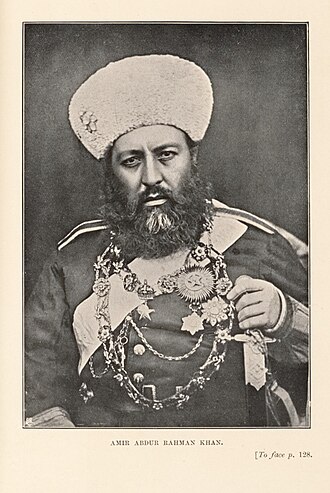
Amir Abdur Rahman Khan of Afghanistan

    Abdhur Rahman, the Durani Chief, of him is the story told.
    His mercy fills the Khyber hills—his grace is manifold;
    He has taken toll of the North and the South—his glory reacheth far,
    And they tell the tale of his charity from Balkh to Kandahar.  

Before the old Peshawur Gate, where Kurd and Kaffir meet,
The Governor of Kabul dealt the Justice of the Street,
And that was strait as running noose and swift as plunging knife,
Tho' he who held the longer purse might hold the longer life.
There was a hound of Hindustan had struck a Euzufzai,
Wherefore they spat upon his face and led him out to die.
It chanced the King went forth that hour when throat was bared to knife;
The Kaffir grovelled under-hoof and clamoured for his life. 

Then said the King: "Have hope, O friend! Yea, Death disgraced is hard;
Much honour shall be thine"; and called the Captain of the Guard,
Yar Khan, a bastard of the Blood, so city-babble saith,
And he was honoured of the King—the which is salt to Death;
And he was son of Daoud Shah, the Reiver of the Plains,
And blood of old Durani Lords ran fire in his veins;
And 'twas to tame an Afghan pride nor Hell nor Heaven could bind,
The King would make him butcher to a yelping cur of Hind. 

"Strike!" said the King. "King's blood art thou—his death shall be his pride!" 
Then louder, that the crowd might catch: "Fear not—his arms are tied!" 
Yar Khan drew clear the Khyber knife, and struck, and sheathed again.
"O man, thy will is done," quoth he; "a King this dog hath slain." 
    
    Abdhur Rahman, the Durani Chief, to the North and the South is sold.
    The North and the South shall open their mouth to a Ghilzai flag unrolled,
    When the big guns speak to the Khyber peak, and his dog-Heratis fly:
    Ye have heard the song—How long? How long? Wolves of the Abazai!  

That night before the watch was set, when all the streets were clear,
The Governor of Kabul spoke: "My King, hast thou no fear?
Thou knowest—thou hast heard,"—his speech died at his master's face.
And grimly said the Afghan King: "I rule the Afghan race.
My path is mine—see thou to thine—to-night upon thy bed 
Think who there be in Kabul now that clamour for thy head."  

That night when all the gates were shut to City and to throne,
Within a little garden-house the King lay down alone.
Before the sinking of the moon, which is the Night of Night,
Yar Khan came softly to the King to make his honour white.
The children of the town had mocked beneath his horse's hoofs,
The harlots of the town had hailed him "butcher!" from their roofs.  

But as he groped against the wall, two hands upon him fell,
The King behind his shoulder spake: "Dead man, thou dost not well!
'Tis ill to jest with Kings by day and seek a boon by night;
And that thou bearest in thy hand is all too sharp to write.
But three days hence, if God be good, and if thy strength remain,
Thou shalt demand one boon of me and bless me in thy pain.
For I am merciful to all, and most of all to thee.
My butcher of the shambles, rest—no knife hast thou for me!"  
    
     Abdhur Rahman, the Durani Chief, holds hard by the South and the North; 
     But the Ghilzai knows, ere the melting snows, when the swollen banks break forth,
     When the red-coats crawl to the sungar wall, and his Usbeg lances fail:
     Ye have heard the song—How long? How long? Wolves of the Zukka Kheyl!  

They stoned him in the rubbish-field when dawn was in the sky,
According to the written word, "See that he do not die."
They stoned him till the stones were piled above him on the plain,
And those the labouring limbs displaced they tumbled back again.
One watched beside the dreary mound that veiled the battered thing,
And him the King with laughter called the Herald of the King. 

It was upon the second night, the night of Ramazan,
The watcher leaning earthward heard the message of Yar Khan.
From shattered breast through shrivelled lips broke forth the rattling breath,
"Creature of God, deliver me from agony of Death." 

They sought the King among his girls, and risked their lives thereby:
"Protector of the Pitiful, give orders that he die!" 

"Bid him endure until the day," a lagging answer came;
"The night is short, and he can pray and learn to bless my name."

Before the dawn three times he spoke, and on the day once more: 
"Creature of God, deliver me, and bless the King therefor!" 

They shot him at the morning prayer, to ease him of his pain,
And when he heard the matchlocks clink, he blessed the King again. 

Which thing the singers made a song for all the world to sing,
So that the Outer Seas may know the mercy of the King. 
   
    Abdhur Rahman, the Durani Chief, of him is the story told,
    He has opened his mouth to the North and the South, they have stuffed his mouth with gold.
    Ye know the truth of his tender ruth—and sweet his favours are:
    Ye have heard the song—How long? How long?—from Balkh to Kandahar. 

Choose another poem

Explore the site from the Home page
§§

The Ballad of the King’s Jest

1 
When spring-time flushes the desert grass,
Our kafilas wind through the Khyber Pass.
Lean are the camels but fat the frails,
Light are the purses but heavy the bales,
As the snowbound trade of the North comes down
To the market-square of Peshawur town. 
In a turquoise twilight, crisp and chill,
A kafila camped at the foot of the hill.
Then blue smoke-haze of the cooking rose,
And tent-peg answered to hammer-nose;
And the picketed ponies, shag and wild,
Strained at their ropes as the feed was piled;
And the bubbling camels beside the load
Sprawled for a furlong adown the road;
And the Persian pussy-cats, brought for sale,
Spat at the dogs from the camel-bale;
And the tribesmen bellowed to hasten the food;
And the camp-fires twinkled by Fort Jumrood;
And there fled on the wings of the gathering dusk
A savour of camels and carpets and musk,
A murmur of voices, a reek of smoke,
To tell us the trade of the Khyber woke. 
2 
The lid of the flesh-pot chattered high,
The knives were whetted and—then came I
To Mahbub Ali the muleteer,
Patching his bridles and counting his gear,
Crammed with the gossip of half a year.
But Mahbub Ali the kindly said,
“Better is speech when the belly is fed.”
So we plunged the hand to the mid-wrist deep
In a cinnamon stew of the fat-tailed sheep,
And he who never hath tasted the food,
By Allah! he knoweth not bad from good.
We cleansed our beards of the mutton-grease,
We lay on the mats and were filled with peace,
And the talk slid north, and the talk slid south,
With the sliding puffs from the hookah-mouth. 
3 
Four things greater than all things are,—
Women and Horses and Power and War.
We spake of them all, but the last the most,
For I sought a word of a Russian post,
Of a shifty promise, an unsheathed sword
And a gray-coat guard on the Helmund ford.
Then Mahbub Ali lowered his eyes
In the fashion of one who is weaving lies.
Quoth he: “Of the Russians who can say?
“When the night is gathering all is gray.
“But we look that the gloom of the night shall die
“In the morning flush of a blood-red sky.
“Friend of my heart, is it meet or wise
“To warn a King of his enemies?
“We know what Heaven or Hell may bring,
“But no man knoweth the mind of the King.
“That unsought counsel is cursed of God
“Attesteth the story of Wali Dad. 
4 
“His sire was leaky of tongue and pen,
“His dam was a clucking Khuttuck hen;
“And the colt bred close to the vice of each,
“For he carried the curse of an unstanched speech.
“Therewith madness—so that he sought
“The favour of kings at the Kabul court;
“And travelled, in hope of honour, far
“To the line where the gray-coat squadrons are.
“There have I journeyed too—but I
“Saw naught, said naught, and—did not die!
“He hearked to rumour, and snatched at a breath
“Of ‘this one knoweth’ and ‘that one saith’,—
“Legends that ran from mouth to mouth
“Of a gray-coat coming, and sack of the South.
“These have I also heard—they pass
“With each new spring and the winter grass. 
5 
“Hot-foot southward, forgotten of God,
“Back to the city ran Wali Dad,
“Even to Kabul—in full durbar
“The King held talk with his Chief in War.
“Into the press of the crowd he broke,
“And what he had heard of the coming spoke.
“Then Gholam Hyder, the Red Chief, smiled,
“As a mother might on a babbling child;
“But those who would laugh restrained their breath,
“When the face of the King showed dark as death.
“Evil it is in full durbar
“To cry to a ruler of gathering war!
“Slowly he led to a peach-tree small,
“That grew by a cleft of the city wall.
“And he said to the boy: ‘They shall praise thy zeal
“So long as the red spurt follows the steel.
“And the Russ is upon us even now?
“Great is thy prudence—await them, thou.
“Watch from the tree. Thou art young and strong,
“Surely thy vigil is not for long.
“The Russ is upon us, thy clamour ran?
“Surely an hour shall bring their van.
“Shout aloud that my men may hear.’ 
6 
“Friend of my heart, is it meet or wise
“To warn a King of his enemies?
“A guard was set that he might not flee—
“A score of bayonets ringed the tree.
“The peach-bloom fell in showers of snow,
“When he shook at his death as he looked below.
“By the power of God, who alone is great,
“Till the seventh day he fought with his fate.
“Then madness took him, and men declare
“He mowed in the branches as ape and bear,
“And last as a sloth, ere his body failed,
“And he hung as a bat in the forks, and wailed,
“And sleep the cord of his hands untied,
“And he fell, and was caught on the points and died. 
7 
“Heart of my heart, is it meet or wise
“To warn a King of his enemies?
“We know what Heaven or Hell may bring,
“But no man knoweth the mind of the King.
“Of the gray-coat coming who can say?
“When the night is gathering all is gray.
“Two things greater than all things are,
“The first is Love, and the second War.
“And since we know not how War may prove,
“Heart of my heart, let us talk of Love!”

Choose another poem

The Ballad of the King’s Daughter

1
 'If my Love come to me over the water, 
  Lowly born, and the King stood by,
How should I greet him, a Monarch's daughter— 
  Coldly, strangely, and haughtily?
2
If my Love come to me over the land, 
  Lowly born, and the King stood by,
Should I kiss him, or give him a frozen hand, 
  Coldly, strangely, and haughtily?'
3
Many came to her over the water, 
  Princes all, and the King stood by;
But she gave them the scorn of a Monarch's daughter, 
  Coldly, strangely and haughtily.
4
Many came to her over the land, 
  Princes all, and the King stood by;
But she gave them to kiss a frozen hand, 
  Coldly, strangely, and haughtily.
5
There came to her one from over the water, 
  Lowly born, and the King stood by;
And the warm blood flushed through the Monarch's daughter, 
  And lo! she fell on his neck with a cry.
6
Many there be by land and water,
   (Wait and watch ye patiently)
That gave their love to a Monarch's daughter, 
  That bound their heart in the days gone by.
7
Hope is little by land or water, 
  Wait and watch ye patiently.
Gold wins not a Monarch's daughter, 
  Neither jewels nor bravery.
8
Get ye fame by land and water,
  That your name live and do not die,
And ye win the love of a Monarch's daughter... 
  Little of blessing comes thereby.

Choose another poem

The Ballad of the Clampherdown

This was originally written for the
"St. James's Gazette" as a deliberate
skit on a letter by a correspondent
who seemed to believe that naval
warfare of the future would be
conducted on the old Nelsonic battle
lines, including boarding, etc. By some
accident it was treated from the first
as a serious contribution - was even,
if I remember rightly, set to music as
a cantata. I never explained this till now.
(Rudyard Kipling, in the Definitive Edition
of his verse, published in 1940, after his death)
1 
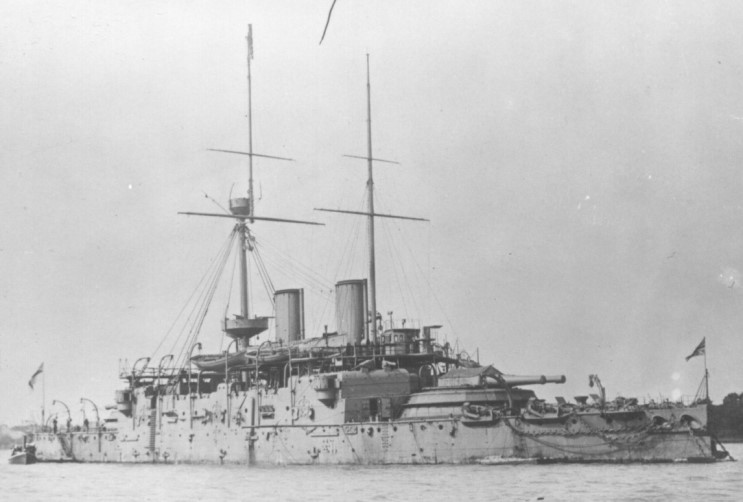
IT WAS our war-ship Clampherdown
  Would sweep the Channel clean,
Wherefore she kept her hatches close
When the merry Channel chops arose,
  To save the bleached marine. 
2 
She had one bow-gun of a hundred ton,
  And a great stern-gun beside;
They dipped their noses deep in the sea,
They racked their stays and stanchions free
  In the wash of the wind-whipped tide.
3 
It was our war-ship Clampherdown,
  Fell in with a cruiser light
That carried the dainty Hotchkiss gun
And a pair o’ heels wherewith to run
  From the grip of a close-fought fight. 
4 
She opened fire at seven miles —
  As ye shoot at a bobbing cork —
And once she fired and twice she fired,
Till the bow-gun drooped like a lily tired
  That lolls upon the stalk. 
5 
“Captain, the bow-gun melts apace,
  The deck-beams break below,
’Twere well to rest for an hour or twain,
And botch the shattered plates again.”
   And he answered, “Make it so.” 
6 
She opened fire within the mile —
  As ye shoot at the flying duck —
And the great stern-gun shot fair and true,
With the heave of the ship, to the stainless blue,
  And the great stern-turret stuck. 
7 
“Captain, the turret fills with steam,
  The feed-pipes burst below —
You can hear the hiss of the helpless ram,
You can hear the twisted runners jam.”
   And he answered, “Turn and go!” 
8 
It was our war-ship Clampherdown,
   And grimly did she roll;
Swung round to take the cruiser’s fire
As the White Whale faces the Thresher’s ire
  When they war by the frozen Pole. 
9 
“Captain, the shells are falling fast,
   And faster still fall we;
And it is not meet for English stock
To bide in the heart of an eight-day clock
  The death they cannot see.” 
10 
“Lie down, lie down, my bold A.B.,
  We drift upon her beam;
We dare not ram, for she can run;
And dare ye fire another gun,
  And die in the peeling steam?” 
11 
It was our war-ship Clampherdown
  That carried an armour-belt;
But fifty feet at stern and bow
Lay bare as the paunch of the purser’s sow,
   To the hail of the Nordenfeldt. 
12 
“Captain, they hack us through and through;
  The chilled steel bolts are swift!
We have emptied the bunkers in open sea,
Their shrapnel bursts where our coal should be.”
  And he answered, “Let her drift.” 
13 
It was our war-ship Clampherdown,
  Swung round upon the tide,
Her two dumb guns glared south and north,
And the blood and the bubbling steam ran forth,
   And she ground the cruiser’s side. 
14 
“Captain, they cry, the fight is done,
  They bid you send your sword.”
And he answered, “Grapple her stern and bow.
They have asked for the steel. They shall have it now;
  Out cutlasses and board!” 
15 
It was our war-ship Clampherdown
  Spewed up four hundred men;
And the scalded stokers yelped delight,
As they rolled in the waist and heard the fight
  Stamp o’er their steel-walled pen. 
16 
They cleared the cruiser end to end,
  From conning-tower to hold.
They fought as they fought in Nelson’s fleet;
They were stripped to the waist, they were bare to the feet,
   As it was in the days of old. 
17 
It was the sinking Clampherdown
   Heaved up her battered side—
And carried a million pounds in steel,
To the cod and the corpse-fed conger-eel,
  And the scour of the Channel tide. 
18 
It was the crew of the Clampherdown
   Stood out to sweep the sea,
On a cruiser won from an ancient foe,
As it was in the days of long ago,
   And as it still shall be.

Choose another poem

Explore the site from the Home page
The Ballad of the Cars

1 
“Now this is the price of a stirrup-cup,”
    The kneeling doctor said.
And syne he bade them take him up,
    For he saw that the man was dead. 
2 
They took him up, and they laid him down
    (And, oh, he did not stir),
And they had him into the nearest town
    To wait the Coroner. 
3 
They drew the dead-cloth over the face,
     They closed the doors upon,
And the cars that were parked in the market-place
    Made talk of it anon. 
4 
Then up and spake a Daimler wide,
    That carries the slatted tank:—
“’Tis we must purge the country-side
    And no man will us thank. 
5 
“For while they pray at Holy Kirk
    The souls should turn from sin,
We cock our bonnets to the work,
    And gather the drunken in.— 
6 
“And if we spare them for the nonce,—
    Or their comrades jack them free,—
They learn more under our dumb-iròns
    Than they learned at their mother’s knee.” 
7 
Then up and spake an Armstrong bold,
     And Siddeley was his name:—
“I saw a man lie stark and cold
    By Grantham as I came. 
8 
“There was a blind turn by a brook,
    A guard-rail and a fall:
But the drunken loon that overtook
    He got no hurt at all! 
9 
“I ha’ trodden the wet road and the dry—
     But and the shady lane;
And why the guiltless soul should die,
    Good reason find I nane.” 
10 
Then up and spake the Babe Austin—
    Had barely room for two—
“’Tis time and place that make the sin,
    And not the deed they do. 
11 
“For when a man drives with his dear,
     I ha’ seen it come to pass
That an arm too close or a lip too near
    Has killed both lad and lass. 
12 
“There was a car at eventide
    And a sidelings kiss to steal—
The God knows how the couple died,
    But I mind the inquest weel. 
13 
“I have trodden the black tar and the heath—
    But and the cobble-stone;
And why the young go to their death,
    Good reason find I none.” 
14 
Then spake a Morris from Oxenford,
    (’Was kin to a Cowley Friar):—
“How shall we judge the ways of the Lord
    That are but steel and fire? 
15 
“Between the oil-pits under earth
    And the levin-spark from the skies,
We but adventure and go forth
    As our man shall devise: 
16 
“And if he have drunken a hoop too deep,
    No kinship can us move
To draw him home in his market-sleep
     Or spare his waiting love. 
17 
“There is never a lane in all England
    Where a mellow man can go,
But he must look on either hand
    And back and front also. 
18 
“But he must busk him every tide,
    At prick of horn, to leap 
Either to hide in ditch beside
    Or in the bankès steep. 
19 
“And whether he walk in drink or muse,
    Or for his love be bound,
We have no wit to mark and chuse,
    But needs must slay or wound.”

                 "            "            " 
20 
They drew the dead-cloth from its face.
    The Crowner looked thereon;
And the cars that were parked in the market-place
     Went all their ways anon.

Choose another poem

Explore the site from the Home page

The Ballad of the Bolivar

1 
Seven men from all the world, back to Docks again,
Rolling down the Ratcliffe Road drunk and raising Cain:
Give the girls another drink ‘fore we sign away—
We that took the “Bolivar” out across the Bay!
2 
We put out from Sunderland loaded down with rails;
We put back to Sunderland ’cause our cargo shifted;
We put out from Sunderland—met the winter gales—
Seven days and seven nights to the Start we drifted. 
3       
Racketing her rivets loose, smoke-stack white as snow,
All the coals adrift adeck, half the rails below,
Leaking like a lobster-pot, steering like a dray—
Out we took the Bolivar, out across the Bay!
4
One by one the Lights came up, winked and let us by;
Mile by mile we waddled on, coal and fo’c’sle short;
Met a blow that laid us down, heard a bulkhead fly;
Left the Wolf behind us with a two-foot list to port. 
5      
Trailing like a wounded duck, working out her soul;
Clanging like a smithy-shop after every roll;
Just a funnel and a mast lurching through the spray—
So we threshed the Bolivar out across the Bay!
6
’Felt her hog and felt her sag, betted when she’d break;
Wondered every time she raced if she’d stand the shock;
Heard the seas like drunken men pounding at her strake;
Hoped the Lord ’ud keep his thumb on the plummer-block. 
7      
Banged against the iron decks, bilges choked with coal;
Flayed and frozen foot and hand, sick of heart and soul;
Last we prayed she’d buck herself into Judgment Day—
Hi! we cursed the Bolivar knocking round the Bay!
8
O her nose flung up to sky, groaning to be still—
Up and down and back we went, never time for breath;
Then the money paid at Lloyd’s caught her by the keel,
And the stars ran round and round dancin’ at our death. 
9     
Aching for an hour’s sleep, dozing off between;
’Heard the rotten rivets draw when she took it green;
’Watched the compass chase its tail like a cat at play—
That was on the Bolivar, south across the Bay.
10
Once we saw between the squalls, lyin’ head to swell—
Mad with work and weariness, wishin’ they was we—
Some damned Liner’s lights go by like a long hotel;
Cheered her from the Bolivar swampin’ in the sea. 
11        
Then a greybeard cleared us out, then the skipper laughed;
“Boys, the wheel has gone to Hell—rig the winches aft!
Yoke the kicking rudder-head–get her under way!”
So we steered her, pulley-haul, out across the Bay!
12
Just a pack o’ rotten plates puttied up with tar,
In we came, an’ time enough, ‘cross Bilbao Bar.
Overloaded, undermanned, meant to founder, we
Euchred God Almighty’s storm, bluffed the Eternal Sea! 
13        
Seven men from all the world, back to town again,
Rollin’ down the Ratcliffe Road drunk and raising Cain:
Seven men from out of Hell. Ain’t the owners gay,
’Cause we took the “Bolivar” safe across the Bay?


Choose another poem

Banquet Night

1 
"Once in so often," King Solomon said,
 Watching his quarrymen drill the stone,
"We will club our garlic and wine and bread 
 And banquet together beneath my Throne,
And all the Brethren shall come to that mess
As Fellow-Craftsmen - no more and no less." 
2 
"Send a swift shallop to Hiram of Tyre,
 Felling and floating our beautiful trees,
Say that the Brethren and I desire
 Talk with our Brethren who use the seas.
And we shall be happy to meet them at mess
As Fellow-Craftsmen - no more and no less." 
3 
"Carry this message to Hiram Abif -
 Excellent master of forge and mine:-
I and the Brethren would like it if 
 He and the Brethren will come to dine 
(Garments from Bozrah or morning-dress) 
As Fellow-Craftsmen - no more and no less." 
4 
"God gave the Hyssop and Cedar their place -
 Also the Bramble, the Fig and the Thorn -
But that is no reason to black a man's face
 Because he is not what he hasn't been born.
And, as touching the Temple, I hold and profess
We are Fellow-Craftsmen - no more and no less." 
5 
So it was ordered and so it was done,
 And the hewers of wood and the Masons of Mark,
With foc'sle hands of Sidon run
 And Navy Lords from the Royal Ark,
Came and sat down and were merry at mess
As Fellow-Craftsmen - no more and no less. 
6 
The Quarries are hotter than Hiram's forge,
 No one is safe from the dog-whip's reach.
It's mostly snowing up Lebanon gorge,
 And it's always blowing off Joppa beach;
But once in so often, the messenger brings 
Solomon's mandate: "Forget these things!
Brother to Beggars and Fellow to Kings,
Companion of Princes - forget these things!
Fellow-Craftsmen, forget these things!" 

Choose another poem

The Battle of Assaye

••THE BATTLE OF ASSAYE


1 
Save where our huge sea-castles from afar
  Beat down, in scorn, some weak Egyptian wall,
We are too slothful to give heed to war.
2 
As a gorged Lion will not stir at all, 
  Although the hunter mock him openly
So we are moveless when the trumpets call.
3 
A soldier's letter, written long ago
  (The ink lies yellow on the tattered page), 
Telling of war, with rugged overflow
Of epithet, and bursts of uncouth rage;
  And as I find the letter—so I write
My record of brave deeds in a dead age.
4 
'The man was a man you could follow to death, 
And dying, thank with your latest breath
For the honour granted—and he had led 
From the sea to the scorching plains inland,
Where the soil would flay the skin from your hand
If you let it rest for a moment there;
And the sun at noonday strikes you dead, 
And the breeze is a blast of furnace air; 
Where the Jungle stands in an inland sea,
When the hills send down their floods to the plain, 
And the waters drown the coiled tree-snake,
And the reed-thatched hamlets by jhil and lake 
Are swamped and demolished utterly.
5 
How can I tell of the months of fight?—
The whole thing slid like an evil dream, 
With the same tired halt at camping-time, 
When the hot day sank into hotter night, 
A broken sleep and a dream of home; 
Then grain for each lowing bullock-team;
And then the sun in the parched blue dome—
The dusty march like an endless rhyme,
And the weary, broken sleep again.
6 
But one thing stays in my mind, and will stay 
Stamped in fire till the day I die:—
How the wild Mahratta ranks gave way 
From a poor four thousand of Englishmen,  
By the little village they call Assaye—
For we were one where they numbered ten; 
How we fought through hot September day 
In the face of their cannon, and how we slew; 
How the horsemen galloped down on us,
And we broke their ranks and fought anew,
In the midst of a fire so murderous 
That it seems a wonder that I am alive;
And, last of all, how we chased the crew, 
Drove them like bullocks our peasants drive, 
Footsore and bleeding. It happened thus:
7 
Three armies were met together to crush 
The whole of our little force-and we 
(Thanks to the tale of a lying scout)
Had come on their camp so suddenly,
Where the Kaitua River curves about
In the steep clay reaches of Bokerdun, 
That we knew we must either fight or die,
Since no succour could come by land or sea,
And we knew that retreat was worse than defeat;
And we thought this over, there in the bush,
As we faced their masses of cavalry,
and counted each point-blank, grinning gun, 
While the turbid river rolled between;
And far away from the plains' burnt green 
The still ghats watched us against the sky.
8 
We found a ford, and the word was given,
And over we went as glad as might be—
Seeing, for months past, we had striven 
With a foe who fled like a dusky cloud,
And we thirsted to meet them in open field, 
With no quarter asked or grace allowed,
And fight till one of us two should yield,
So, a splash through the stream with arms held high,
A rattle of stones when the horses passed, 
And we found ourselves on the farther side, 
And we only feared lest the foe should fly— 
Cheating us out of our fight at the last.
For we saw their ranks fall back and divide,
And we watched their faces horrified
That our handful should dare to strive with them.
And then the view was hid from us wholly—
Like a fleecy fringe on a garment's hem,
The whole of the front of their line outbroke 
In a dense, white bank of blinding smoke, 
That rose against the blue sky slowly,
While the red death flickered in spirts of fire 
As each cannon opened its lips and spoke
A deep-mouthed warning to bid us retire.
On the left the Kaitua hemmed us in, 
On the right a rushing watercourse; 
In front their masses of infantry,
Their surging waves of Mahratta horse, 
Came down on us like a winter sea;
And we fought as they fight who fight for life—
Each one as though the army's fate
Hung on the strength of his own right wrist 
When he warded away the cold curved knife, 
And the wiry devil that wielded it
Recoiled from the bayonet—just too late—
And the steel came out with a wrench and a twist 
So we fought and slew in the midst of the din
Till their line was broken-till man and horse 
Fled over the rushing watercourse,
And the greatest fight of the world was our own!
And now my face is scarred to the bone,
And I'm lame maybe from a musket-ball— 
Yet I thank God always (and ever shall)
That I fought in a fight the world will applaud; 
For the new generations by and bye
Shall be proud of that long September day, 
When ten men fled from the face of one, 
And the river ran red on its seaward way,
As it flowed through the village of Bokerdun— 
Red with the blood that was spilt at Assaye!'

Choose another poem

An Astrologer’s Song

1 
To the Heavens above us
  O look and behold 
The Planets that love us 
  All harnessed in gold!
What chariots, what horses 
  Against us shall bide 
While the Stars in their courses 
  Do fight on our side? 
2 
All thought, all desires,
  That are under the sun, 
Are one with their fires,
  As we also are one: 
All matter, all spirit,
  All fashion, all frame,
Receive and inherit 
  Their strength from the same.
3 
(Oh, man that deniest
  All power save thine own,
Their power in the highest 
  Is mightily shown.
Not less in the lowest
  That power is made clear.
Oh, man, if thou knowest,
  What treasure is here!)
4
Earth quakes in her throes
  And we wonder for why!
But the blind planet knows
  When her ruler is nigh;
And, attuned since Creation
  To perfect accord,
She thrills in her station 
  And yearns to her Lord.
5
The waters have risen, 
  The springs are unbound - 
The floods break their prison,
  And ravin around.
No rampart withstands 'em,
  Their fury will last,
Till the Sign that commands 'em 
  Sinks low or swings past.
6
Through abysses unproven 
  And gulfs beyond thought,
Our portion is woven,
  Our burden is brought.
Yet They that prepare it,
  Whose Nature we share,
Make us who must bear it
  Well able to bear.
7
Though terrors o'ertake us 
  We'll not be afraid.
No power can unmake us
  Save that which has made.
Nor yet beyond reason
  Or hope shall we fall - 
All things have their season,
  And Mercy crowns all!
8
Then, doubt not, ye fearful - 
The Eternal is King - 
Up, heart, and be cheerful,
And lustily sing: -
What chariots, what horses
Against us shall bide
While the Stars in their courses 
Do fight on our side? 

Choose another poem

Explore the site from the Home page

Arithmetic on the Frontier

1 
A great and glorious thing it is
  To learn, for seven years or so, 
The Lord knows what of that and this, 
  Ere reckoned fit to face the foe—
The flying bullet down the Pass, 
That whistles clear: "All flesh is grass." 
2
Three hundred pounds per annum spent
  On making brain and body meeter
For all the murderous intent
  Comprised in "villainous saltpetre". 
And after?—Ask the Yusufzaies 
What comes of all our 'ologies.  
3
A scrimmage in a Border Station—
  A canter down some dark defile—
Two thousand pounds of education
  Drops to a ten-rupee jezail—  
The Crammer's boast, the Squadron's pride, 
Shot like a rabbit in a ride!  
4
No proposition Euclid wrote
  No formulae the text-books know, 
Will turn the bullet from your coat, 
  Or ward the tulwar's downward blow. 
Strike hard who cares—shoot straight who can—
The odds are on the cheaper man. 
5
One sword-knot stolen from the camp
  Will pay for all the school expenses
Of any Kurrum Valley scamp
  Who knows no word of moods and tenses, 
But, being blessed with perfect sight, 
Picks off our messmates left and right. 
6
With home-bred hordes the hillsides teem. 
  The troopships bring us one by one, 
At vast expense of time and steam, 
  To slay Afridis where they run. 
The "captives of our bow and spear"
Are cheap, alas! as we are dear.


Choose another poem